
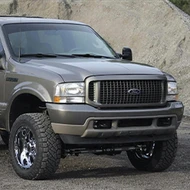
Top 10 7.3 Powerstroke Parts to Replace Before They Leave You Stranded
Apr 29th 2026
The 7.3L Powerstroke has earned its reputation the honest way: by generally refusing to die for decades. But even the best diesel ever stuffed into a Ford pickup is still attached to 20-plus-year-old sensors, wiring, seals, relays, pumps, and wear parts.
This list isn’t about throwing parts at a truck. It’s about knowing the common failure points that can turn a perfectly good 7.3 into a major pain. Replace the right parts before they fail, and the truck usually rewards you with better starts, cleaner idle, fewer random hiccups, and a lot less “Fix Or Repair Daily” comments from friends.
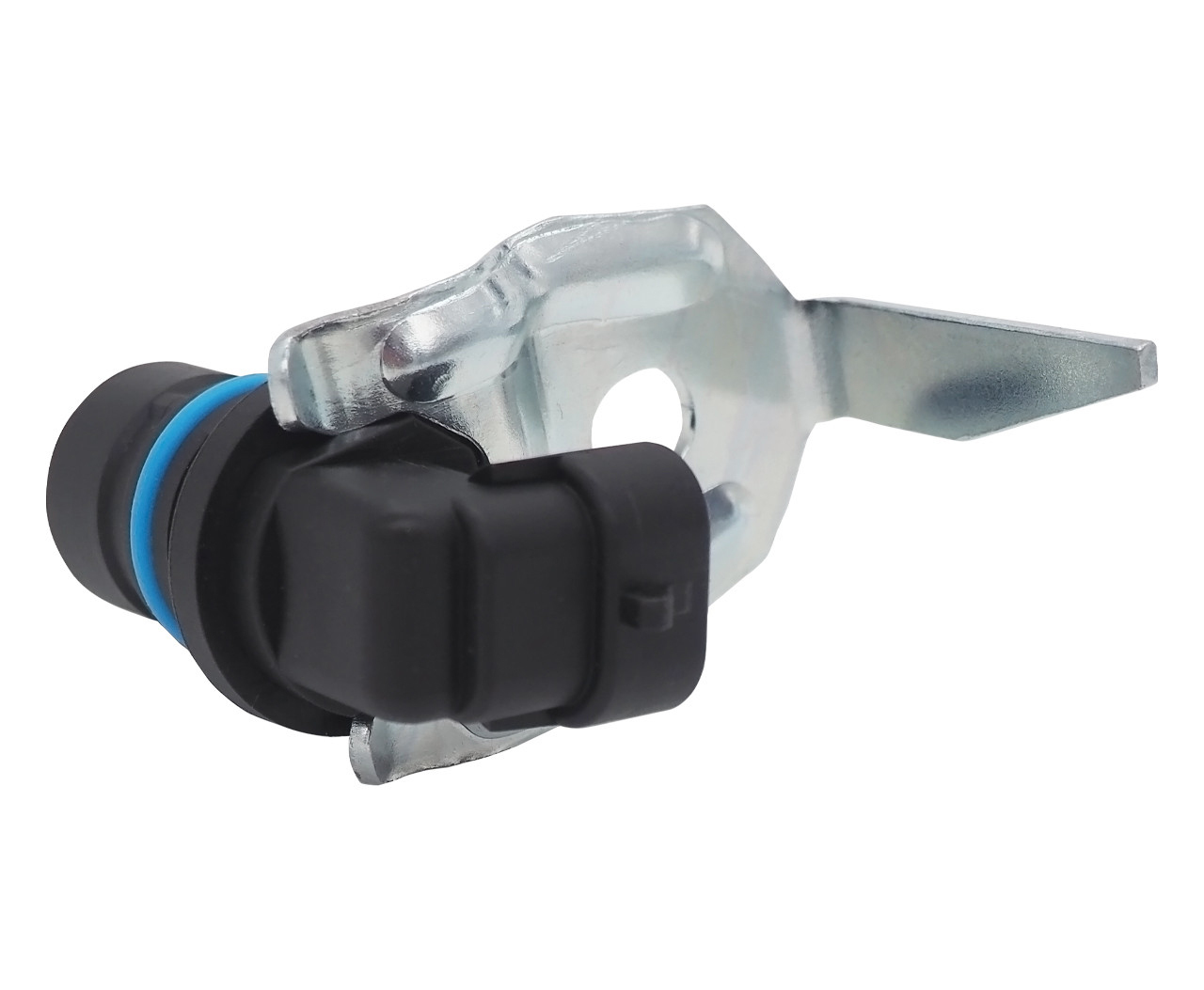
1. Cam Position Sensor — CPS
The cam position sensor is one of the most famous 7.3L Powerstroke failure points for a reason. The PCM uses the CPS signal to know engine speed and camshaft position, which means it directly affects injection timing.
Symptoms of a failing CPS:
- Hard starts, random shutoffs, tachometer not moving while cranking, intermittent no-start, rough running, or a truck that dies like someone flipped a switch.
What to expect after replacement (assuming the existing part was bad):
A good CPS can restore clean RPM signal, improve starting consistency, and eliminate random stall/no-start behavior when the sensor was the cause. Riffraff’s upgraded CPS is designed with newer sensor technology and improved signal strength compared to the original-style black CPS.
Quick install tips:
Keep a spare CPS and the correct socket in the glove box. It is one of the few parts that can genuinely save a tow bill. Clean the mounting area before install, make sure the connector is fully seated (and the wires are in good condition).
Related Parts (more available on RiffraffDiesel.com):
Cam Position Sensor Upgraded CPS 94-03 7.3L: https://www.riffraffdiesel.com/cam-position-sensor-upgraded-cps-94-03-7-3l/
CPS O-ring: https://www.riffraffdiesel.com/cps-o-ring/
CPS Harness Pigtail 94-03: https://www.riffraffdiesel.com/cps-harness-pigtail-94-03/
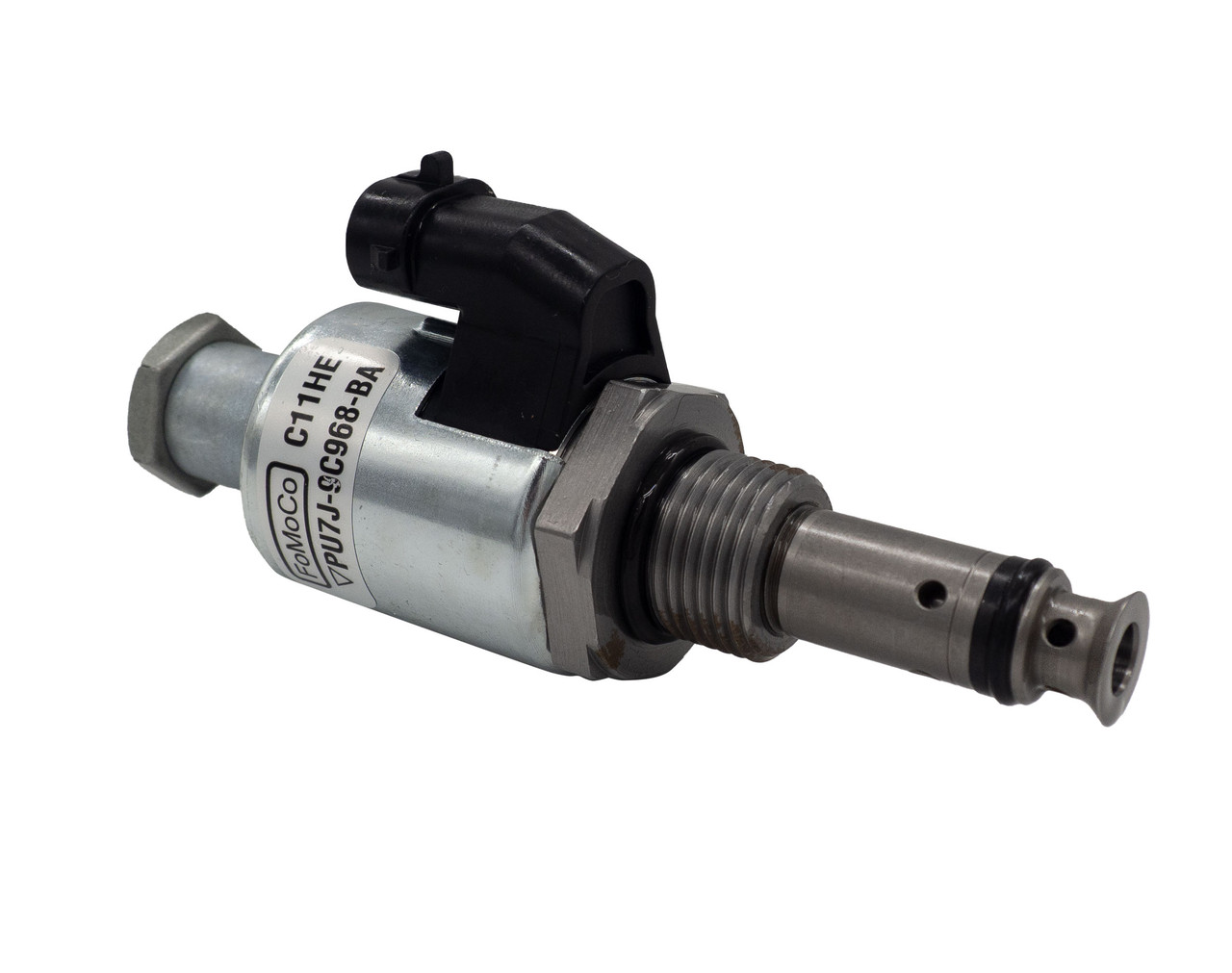
2. IPR Valve — Injection Pressure Regulator
The IPR valve controls high-pressure oil system pressure, and on a HEUI-injected 7.3, high-pressure oil is what fires the injectors. No oil control, no injector control.
Symptoms of a failing IPR:
- Long crank, hot no-start, rough idle, surging, stalling, low ICP pressure, poor throttle response, or a truck that starts cold but gets problematic once warm.
What to expect after replacement (assuming the existing part was bad):
When the IPR is the issue, replacement usually brings back stable injection pressure, cleaner starts, smoother idle, and more predictable throttle response.
Quick install tips:
Inspect the IPR nut, connector, and wiring before condemning the valve. The tin nut can loosen or fall off, which can contribute to running issues. Use the right socket, keep the area clean, and inspect the o-rings before installation. Consider cleaning the valve before replacing it as most issues are due to contamination.
Related Parts (more available on RiffraffDiesel.com):
Alliant Injection Pressure Regulator IPR 94-95: https://www.riffraffdiesel.com/alliant-injection-pressure-regulator-ipr-94-95/
Alliant Injection Pressure Regulator IPR 96-03: https://www.riffraffdiesel.com/alliant-injection-pressure-regulator-ipr-96-03/
IPR Complete Re-Seal kit: https://www.riffraffdiesel.com/ipr-complete-re-seal-kit/
Alliant IPR / VGT / EBPV Solenoid Pigtail Connector Repair Kit 94-07: https://www.riffraffdiesel.com/alliant-ipr-vgt-ebpv-soleniod-pigtail-connector-repair-kit-94-07/
HPOP IPR Block Off Test Tool 94-03: https://www.riffraffdiesel.com/hpop-ipr-block-off-test-tool-94-03/
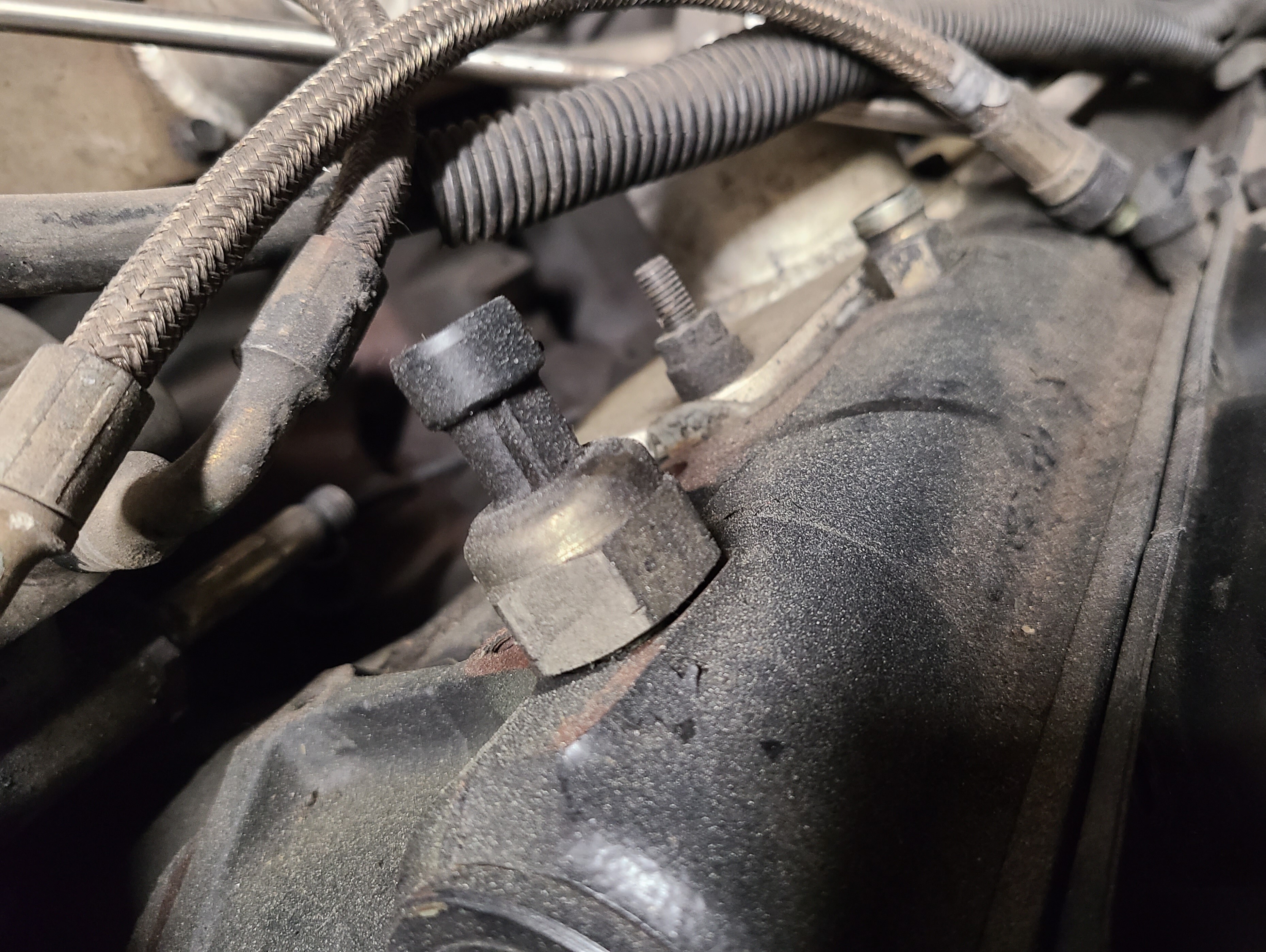
3. ICP Sensor and Pigtail
The ICP sensor tells the PCM what the high-pressure oil system is actually doing. The IPR controls pressure; the ICP reports pressure. If the sensor lies, leaks oil into the connector, or has a failing pigtail, the PCM can't make good decisions.
Symptoms of a failing ICP sensor or pigtail:
- Oil in the connector, rough idle, surging, hard start, stalling, check engine light, erratic ICP readings, or a truck that runs better with the sensor unplugged.
What to expect after replacement (assuming the existing part was bad):
A fresh ICP sensor and clean pigtail can restore accurate high-pressure oil feedback, improve idle quality, and make diagnosis much cleaner.
Quick install tips:
Do not just replace the sensor and ignore an oil-soaked connector. If the pigtail is contaminated, brittle, or previously “repaired” with electrical tape and optimism, replace it. Use a scan tool to verify ICP readings before and after.
Related Parts (more available on RiffraffDiesel.com):
Injection Control Pressure ICP Sensor 94-96: https://www.riffraffdiesel.com/injection-control-pressure-icp-sensor-94-96/
Injection Control Pressure ICP Sensor 97-03: https://www.riffraffdiesel.com/injection-control-pressure-icp-sensor-97-03/
ICP / EBP Pigtail Harness 94-07: https://www.riffraffdiesel.com/icp-ebp-pigtail-harness-94-07/
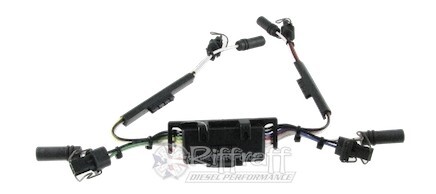
4. Under Valve Cover Harness — UVCH
The UVCH carries power to the injectors and glow plugs. It also lives under the valve cover in heat and oil, which is not exactly the best environment for electrical wiring.
Symptoms of a failing UVCH:
- Dead cylinders, random miss, rough idle, contribution codes, hard cold starts, glow plug issues, or a truck that changes how it runs when you wiggle the valve cover connector.
What to expect after replacement (assuming the existing part was bad):
A good UVCH restores clean injector and glow plug circuit operation. Expect smoother idle, more consistent starts, fewer random misses, and better confidence that the injectors are actually getting the signal they need.
Quick install tips:
Replace valve cover gaskets and external connectors as needed. On 1999–2003 trucks, remember there is one harness per head. On 1994.5–1997 trucks, you need four harnesses total, two per head, if replacing them all.
Related Parts (more available on RiffraffDiesel.com):
Under Valve Cover Harness 94.5-97: https://www.riffraffdiesel.com/under-valve-cover-harness-94-5-97/
Under Valve Cover Harness 99-03: https://www.riffraffdiesel.com/under-valve-cover-harness-99-03/
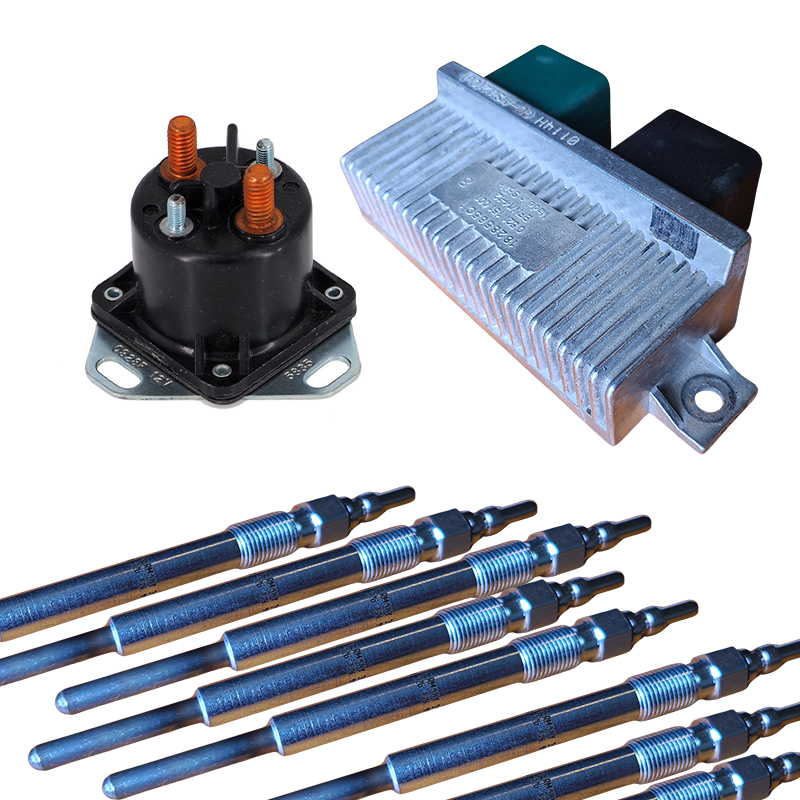
5. Glow Plugs and Glow Plug Relay/Module
A 7.3 can be a cold-blooded animal when the glow plug system is weak. The glow plugs heat the combustion chambers for cold starts, while the relay or module controls when they're on.
Symptoms of weak glow plugs or relay/module:
- Hard cold starts, white smoke on startup, long crank, rough idle until warm, starts fine when plugged in, or glow plug circuit codes. Failed glow plugs, bad relay/module, harness faults, and ECT-related control issues are common cold-start causes.
What to expect after replacement (assuming the existing part was bad):
Better cold starts, less white smoke, less starter abuse, and fewer embarrassing “come on, come on, come on” moments in the driveway.
Quick install tips:
Use quality glow plugs. Cheap glow plugs can swell, break, or create a bigger problem than the one you started with. Test the relay/module and wiring before assuming all eight glow plugs are bad. If the valve covers are already off for UVCH work, that is the time to inspect the glow plug system.
Related Parts (more available on RiffraffDiesel.com):
Glow Plug Relay / GPR 1994-2003: https://www.riffraffdiesel.com/glow-plug-relay-gpr/
GPCM/ Glow Plug Control Module 99-10: https://www.riffraffdiesel.com/gpcm-glow-plug-control-module-99-10/
Glowplug ZD-30 94-03 7.3L: https://www.riffraffdiesel.com/glowplug-zd-30-94-03-7-3l/
GPCM Wiring Replacement Pigtail 99.5-07: https://www.riffraffdiesel.com/gpcm-wiring-replacement-pigtail-99-5-07/
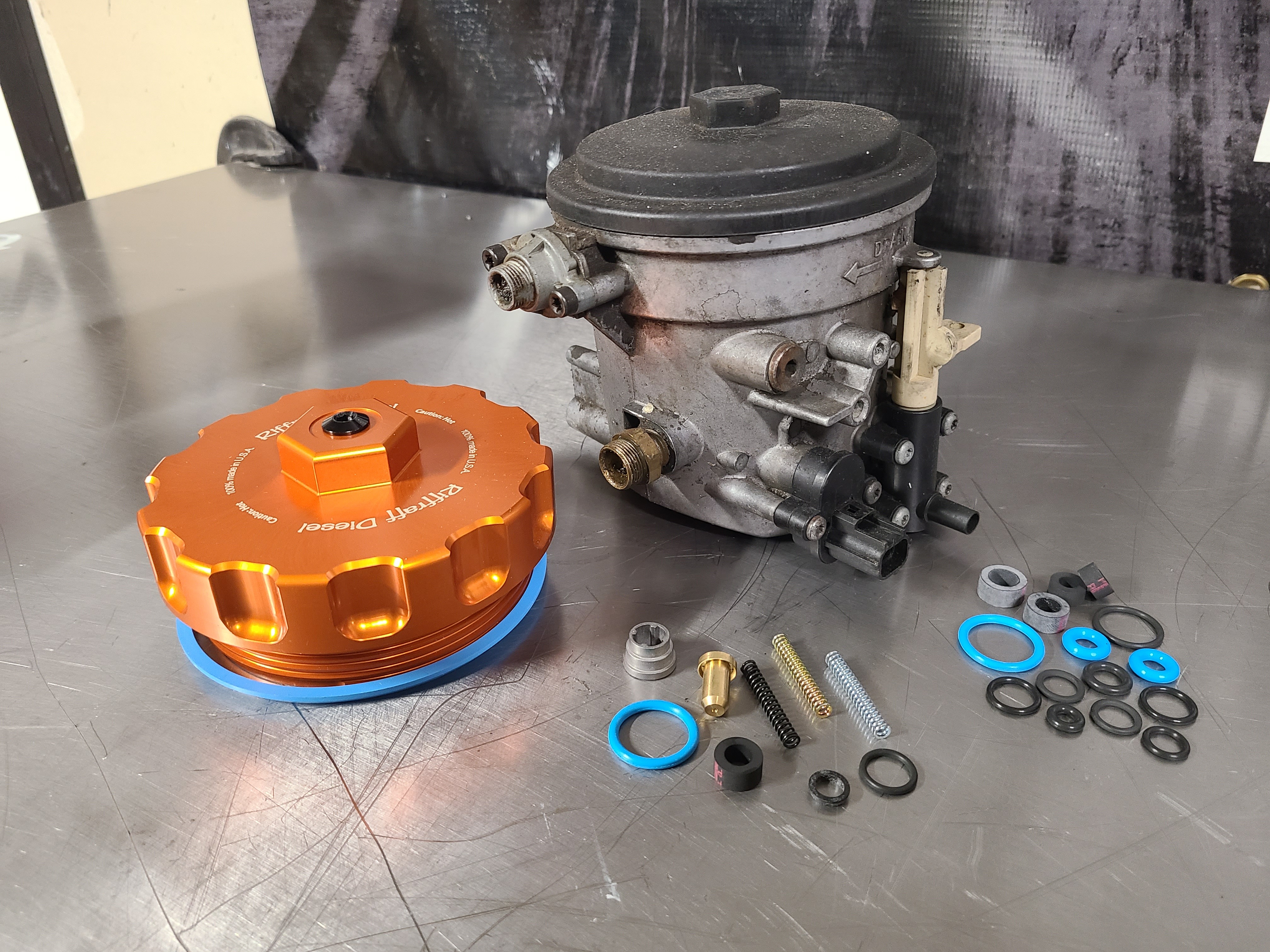
6. Fuel Pump and Fuel Delivery Parts
The 7.3 needs steady fuel supply to keep the HEUI system happy. A weak fuel pump, clogged filter, leaking fuel bowl, or failing fuel pressure regulator setup can cause drivability problems that feel like injector or high-pressure oil issues.
Symptoms of fuel delivery problems:
- Long crank, hesitation, low power, rough running, random stumble, injector noise, fuel leaks, or a truck that falls on its face under load.
What to expect after replacement (assuming the existing part was bad):
Restored fuel pressure usually brings cleaner throttle response, better power under load, smoother idle, and less strain on the injectors.
Quick install tips:
Replace the fuel filter, inspect the fuel bowl, and do not ignore small leaks. If working on an OBS mechanical pump, we recommend banjo gaskets with the pump. For 1999–2003 trucks, verify fuel pressure before and after if you have the tools.
Related Parts (tons more available on RiffraffDiesel.com):
Complete OBS Fuel Bowl Reseal Kit w/ Fluorosilicone Drain O-rings: https://www.riffraffdiesel.com/complete-obs-fuel-bowl-reseal-kit-w-fluorosilicone-drain-orings/
Complete Fuel Bowl Seal Kit w/ Fluorosilicone Drain O-rings 99-03: https://www.riffraffdiesel.com/complete-fuel-bowl-seal-kit-w-fluorosilicone-drain-orings-99-03/
Bosch Electric Fuel Pump: https://www.riffraffdiesel.com/bosch-electric-fuel-pump/
Fuel Pump Assembly 99-03: https://www.riffraffdiesel.com/fuel-pump-assembly-99-03/
Fuel Feed Line SS Braided Hose Kit - 7.3L 99-03: https://www.riffraffdiesel.com/fuel-feed-line-ss-braided-hose-kit-7-3l-99-03/
OEM Fuel Filter 99-03: https://www.riffraffdiesel.com/oem-fuel-filter-99-03/
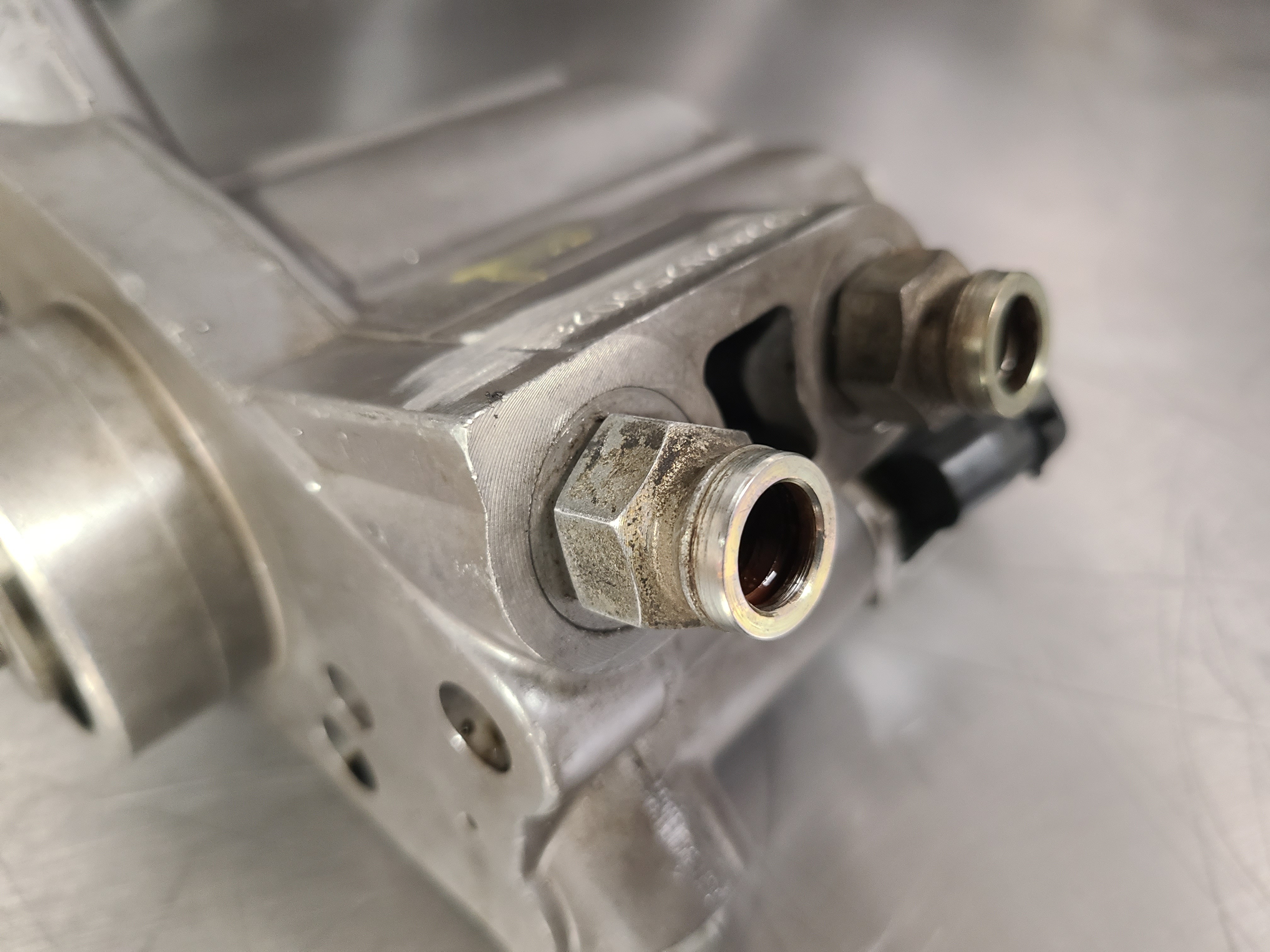
7. HPOP O-Rings, Hoses, and Fittings
The HPOP system is the heart of injection system on a 7.3. If the truck cannot build or hold high-pressure oil, it cannot reliably fire the injectors. Small leaks at HPOP fittings, plugs, or lines can create big starting and drivability headaches.
Symptoms of HPOP system leaks or worn seals:
- Oil in the valley, long crank, hot no-start, low ICP pressure, inconsistent idle, poor throttle response, or visible leakage around the pump or lines.
What to expect after replacement (assuming the existing part was bad):
When the leak is the issue, resealing the HPOP system can restore pressure stability, reduce oil leaks, improve hot starts, and clean up drivability.
Quick install tips:
Cleanliness matters. Dirt in the high-pressure oil system is not your friend. Inspect hose fittings carefully.
Related Parts (more available on RiffraffDiesel.com):
HPOP Test Gauge 1994-2003: https://www.riffraffdiesel.com/hpop-test-gauge-1994-2003/
HPOP JIC Line - Passenger Side Head 99-03: https://www.riffraffdiesel.com/hpop-jic-line-passenger-side-head-99-03/
HPOP JIC Line - Driver Side Head 99-03: https://www.riffraffdiesel.com/hpop-jic-line-driver-side-head-99-03/
Terminator T500 HPOP: https://www.riffraffdiesel.com/terminator-t500-hpop/
Serviceable Long Threaded HPOP Plug: https://www.riffraffdiesel.com/serviceable-long-threaded-hpop-plug/
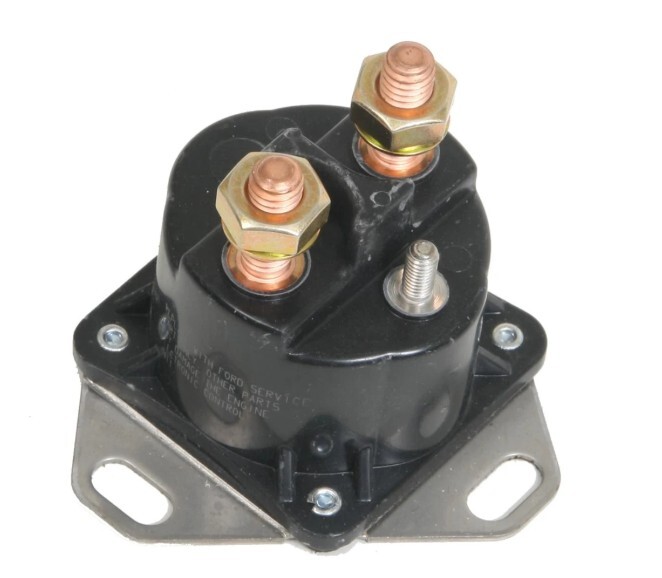
8. Starter Relay/Solenoid and Starting Circuit
A good-running 7.3 still needs to crank fast enough to start. Weak batteries, corroded cables, a tired starter, or a bad starter relay can make a healthy engine act sick.
Symptoms of starter relay or starting circuit problems:
- Click/no crank, intermittent crank, slow crank, starts sometimes but not others, lights dim hard while cranking, or the classic “nothing happens until I try it six times” routine.
What to expect after replacement (assuming the existing part was bad):
A healthy starting circuit gives faster crank speed, better cold-start performance, and less abuse on batteries and cables.
Quick install tips:
Before replacing parts, load-test both batteries and inspect cable ends. The 7.3 uses a lot of current to crank, and one weak battery can drag the whole system down. Clean grounds, check the fender-mounted relay, and do not trust battery terminals that look like they were recovered from the ocean.
Related Parts (more available on RiffraffDiesel.com):
Starter Relay Solenoid 94-01 7.3L: https://www.riffraffdiesel.com/starter-relay-solenoid-94-01-7-3l/
Negative Battery Terminal Clamp: https://www.riffraffdiesel.com/negative-battery-terminal-clamp/
Positive Battery Terminal Clamp: https://www.riffraffdiesel.com/positive-battery-terminal-clamp/
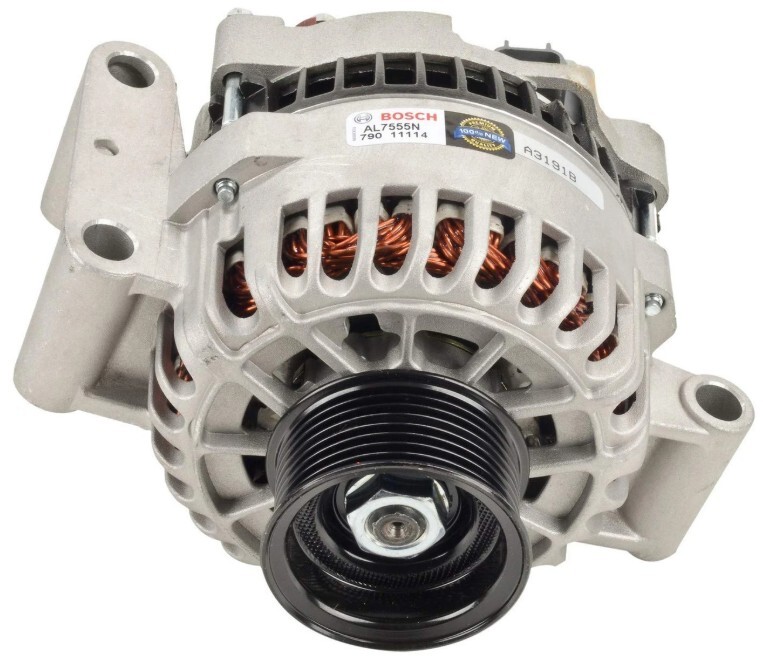
9. Alternator and Charging System Wiring
The alternator keeps the batteries alive after the truck starts. When it gets weak, the truck may run fine for a while, then slowly die, and/or start acting odd. On a diesel with glow plugs, relays, modules, lights, blower motors, and trailer loads, charging system health matters even more.
Symptoms of alternator or charge wiring problems:
- Battery light, low voltage, repeated dead batteries, slow crank after driving, dim lights, erratic electrical behavior, or batteries that test good but never stay charged.
What to expect after replacement (assuming the existing part was bad):
A healthy alternator and charge circuit should stabilize system voltage, improve battery life, and make starts more consistent.
Quick install tips:
Check charging voltage at the batteries, inspect the alternator plug, and look closely at charge cables and grounds. Replacing an alternator without fixing a cooked connector or corroded cable is a good way to buy another alternator later.
Related Parts (more available on RiffraffDiesel.com):
Bosch Alternator 110 amp 1999-2003 7.3L: https://www.riffraffdiesel.com/bosch-alternator-110-amp-1999-2003-7-3l/
Alternator Wire Harness Pigtail 99-07: https://www.riffraffdiesel.com/alternator-wire-harness-pigtail-99-07/
Alternator Single Wire Harness Pigtail 94-97: https://www.riffraffdiesel.com/alternator-single-wire-harness-pigtail-94-97/
Alternator Triple Wire Harness Pigtail 94-97: https://www.riffraffdiesel.com/alternator-triple-wire-harness-pigtail-94-97/
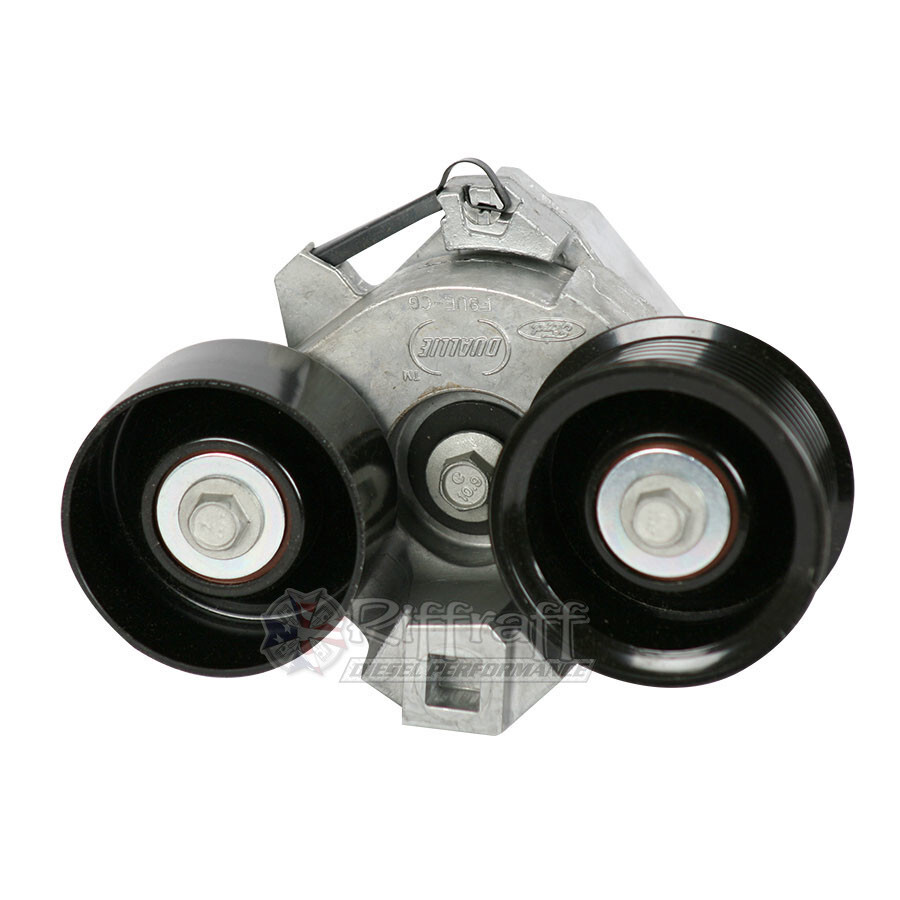
10. Serpentine Belt, Tensioner, and Idler Pulleys
The serpentine belt drives critical accessories. When the belt, tensioner, or idlers fail, the truck can lose charging, cooling, power steering, and general roadside dignity in one event.
Symptoms of belt drive problems:
- Belt chirp, squeal, belt walking off the pulleys, visible cracking, wobbling tensioner, rough idler bearings, or accessory-drive noise that changes with RPM. Riffraff’s tensioner listing describes it as a Motorcraft replacement for worn factory units, and the related idler pulley page calls out replacing worn idlers with new OEM Motorcraft parts.
What to expect after replacement (assuming the existing part was bad):
A fresh belt drive system should run quieter, track properly, reduce accessory wear, and remove one of the easiest ways to end up on the shoulder. On OBS trucks, Ford TSB 98-23-14 addressed recurring belt chirp/squeal on certain 1995–1997 F-Series and 1995–1998 Econoline 7.3L models by upgrading to the later dual-arm tensioner design.
Quick install tips:
Replace the belt, tensioner, and questionable idlers together if they are original or high-mileage. Spin each pulley by hand with the belt off. Any grinding, wobble, play, or roughness means it is time. Take a picture of belt routing before removal unless you enjoy puzzles with grease on your hands.
Related Parts (more available on RiffraffDiesel.com):
Gates FleetRunner Micro-V Serpentine Drive Belt 7.3L 99-03: https://www.riffraffdiesel.com/gates-fleetrunner-micro-v-serpentine-drive-belt-7-3l-99-03/
Serpentine Belt Tensioner 99-03: https://www.riffraffdiesel.com/serpentine-belt-tensioner-99-03/
Serpentine Belt Upper Idler Pulley 94-97: https://www.riffraffdiesel.com/serpentine-belt-upper-idler-pulley-94-97/
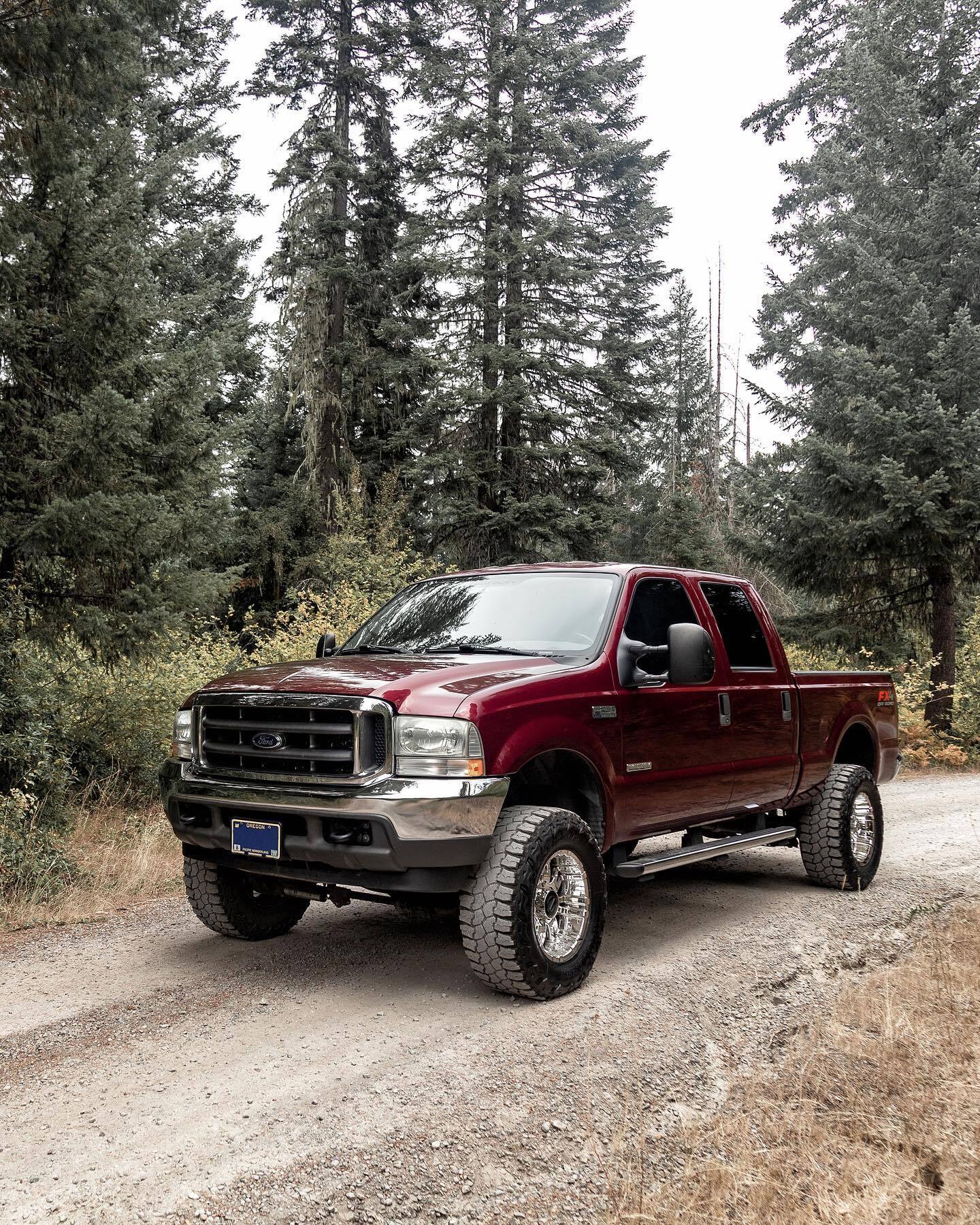
Final Thoughts: Preventative Maintenance Beats a Tow Truck
The 7.3L Powerstroke is tough, but it is not magical. Most of the failures that strand these trucks are not dramatic engine failures. They are sensors, wiring, relays, o-rings, pumps, belts, and old electrical connections finally giving up after decades of heat, vibration, oil, and weather.
Start with the known weak points. Use quality parts. Fix wiring while you are in there. Keep a spare CPS in the glove box. And remember: the cheapest part is not cheap when it strands a loaded truck, a trailer, or your weekend plans on the side of the road.