
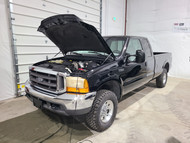
“My 7.3 Cranks But Won’t Start” — Symptoms, Codes, Things To Check, and a Diagnostic Tree
Jun 26th 2026
A 7.3L Powerstroke that cranks but won’t start does not automatically need a cam sensor, injectors, or an HPOP. It needs diagnosis. The 7.3 is simple compared to newer diesels, but it still needs four things to start:
- Cranking speed.
- Fuel.
- High-pressure oil.
- Injector command.
Miss one, and it will crank all day, but never start.
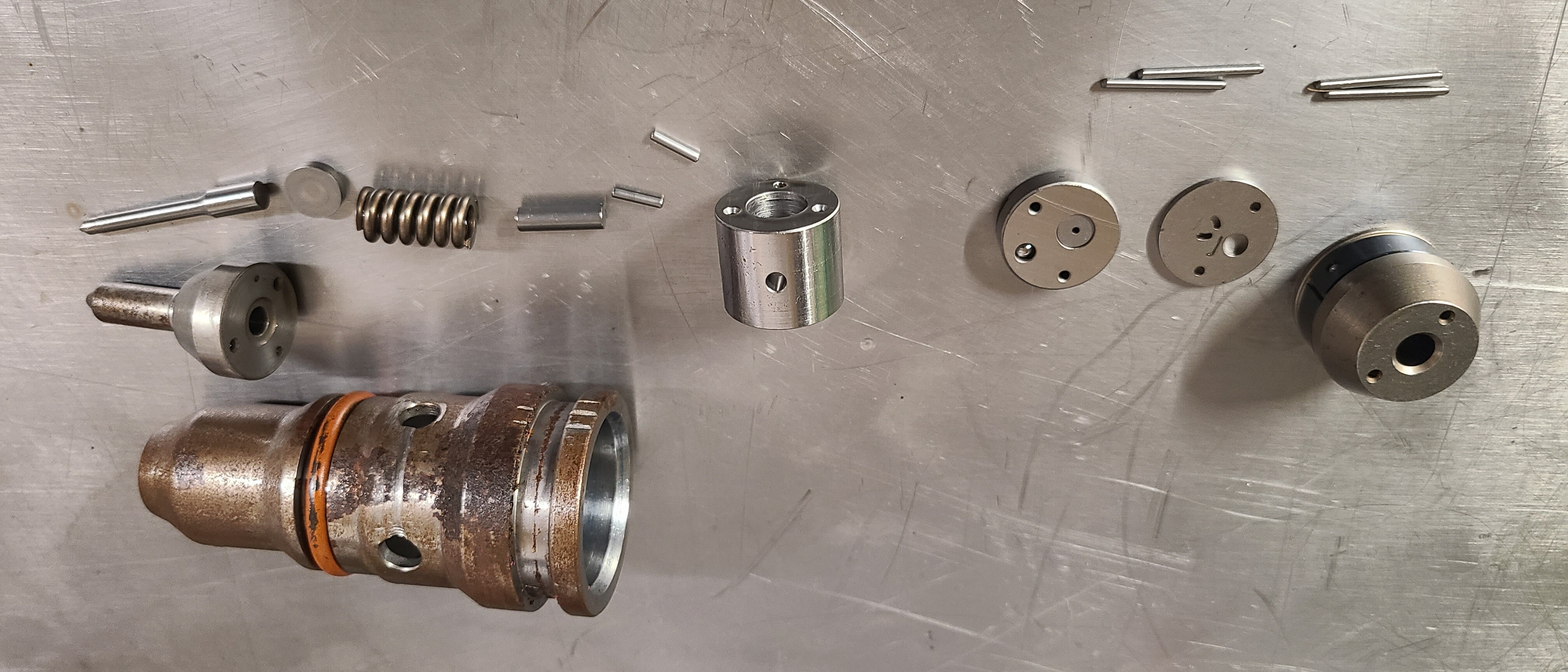
Common Symptoms
A 7.3 crank/no-start may show up as:
- Cranks normally but never fires
- Long crank, then no start
- Starts cold but won’t restart hot
- Starts hot but won’t start cold
- White smoke while cranking
- No smoke while cranking
- No RPM signal while cranking
- Wait-to-start light does not come on
- Fuel bowl is empty
- HPOP reservoir is low
- Starts, runs briefly, then dies
- Stalled while driving and now won’t restart
The pattern matters. A cold no-start and a hot no-start are not the same problem.
Common Codes
Common no-start-related codes include (you also may not get codes at all):
P0340 / P0344 - Cam position sensor signal problem.
P1211 / P1212 - ICP pressure higher/lower than expected or not reaching target.
P1280 / P1281 - ICP circuit low/high.
P1283 / P1284 - ICP/IPR control pressure issues.
P1293 / P1294 / P1316 - IDM, injector circuit, UVCH, or valve cover harness-related faults.
P1391 / P1393 / P1395 / P1396 - Glow plug system faults, usually more important on cold-start complaints.
Check These First
Engine Oil Level - The 7.3 uses engine oil to fire the injectors. If the oil level is low, the high-pressure oil system may not build enough pressure to start. Check the dipstick before chasing sensors.
HPOP Reservoir Level -The HPOP reservoir should be near full. If it is low or empty, the truck may crank but not build ICP. Fill it, retest, and see if it drains back down. A low reservoir can point to oil supply, drain-back, or internal leakage issues.
Fuel in the Bowl - Remove the fuel filter cap and verify the bowl has fuel. If the bowl is empty, stop diagnosing injectors. Check the fuel filter, lift pump, fuel pickup, fuel bowl leaks, fuel heater, and fuel pressure.
Cranking Speed and Voltage - Weak batteries, bad cables, poor grounds, or a tired starter can make a good 7.3 act dead. If it cranks slow, fix that first. Bad cranking speed can keep ICP from building and make scan data misleading.
Wait-to-Start Light - If the wait-to-start light does not come on, check PCM power, fuses, relays, and wiring. On some 99–01 trucks, a shorted fuel bowl heater can blow the underhood 30-amp fuse and kill PCM power.
Smoke While Cranking - After 10 seconds of cranking:
- No smoke usually means no fuel delivery, no injector command, no sync, or low ICP.
- White smoke usually means fuel is getting there but not igniting. Think glow plugs, cold oil, low ICP, injector issues, or compression.
7.3 Crank/No-Start Diagnostic Tree
Step 1: Does It Crank Fast Enough? Minimum 150-200 RPM is needed. Slow cranking creates bad data. Fix the electrical basics first.
No: Fix batteries, cables, grounds, starter, or voltage drop.
Yes: Go to Step 2.
Step 2: Does the Wait-to-Start Light Come On? No wait-to-start light often means the PCM is not waking up.
No: Check PCM power, fuses, PCM relay, and fuel bowl heater circuit.
Yes: Go to Step 3.
Step 3: Do You Have RPM While Cranking? No RPM signal means the PCM does not know the engine is turning. Watch RPM on a scan tool. Tach movement can also help, depending on the truck.
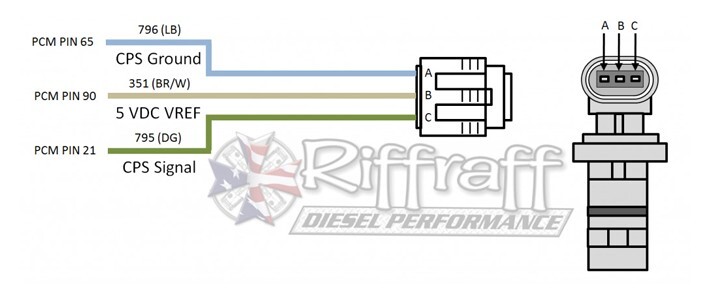
No RPM: Check the cam position sensor, CPS pigtail, wiring, and related circuit.
RPM present: Go to Step 4.
Step 4: Is There Smoke While Cranking? Smoke tells you if fuel is likely getting into the cylinders.
No smoke: Go to Step 5.
White smoke: Go to Step 6.
Step 5: Check Fuel Supply. No fuel means no start. Simple enough.
Verify:
- Fuel level
- Fuel bowl level
- Fuel filter condition
- Fuel pressure
- Lift pump operation
- Fuel heater circuit
- Air intrusion
- Water or contamination
Fuel supply bad: Fix the fuel problem.
Fuel supply good: Go to Step 6.
Step 6: Is ICP Building While Cranking? A 7.3 generally needs around 500 PSI ICP minimum to start.
ICP below 500 PSI: Go to Step 7.
ICP reaches 500 PSI or higher: Go to Step 8.
Step 7: Low ICP Diagnosis
If IPR duty cycle is high and ICP is low, the system is trying to build pressure but can’t. That usually means a leak, IPR issue, or weak pump.
If ICP is low, check:
- Engine oil level
- HPOP reservoir level
- ICP sensor and pigtail
- IPR valve
- IPR O-rings
- Injector O-rings
- HPOP line leaks
- HPOP output
Fix the oil pressure problem, then retest.
Step 8: Do You Have Injector Pulse Width? Pulse width means the PCM is commanding the injectors. If RPM, ICP, and pulse width are all present, the truck is trying to start.
No pulse width: Check sync, CPS signal, IDM, PCM power, wiring, and injector electrical circuits.
Pulse width present: Go to Step 9.
Step 9: Cold No-Start Checks
If it only hates cold starts, check:
- Glow plug relay
- Glow plugs
- Valve cover gasket connectors
- Under-valve-cover harnesses
- Battery voltage
- Oil viscosity
- Injector health
- Compression, if everything else checks out
Cold white smoke usually means fuel is there, but it is not lighting cleanly.
Step 10: Hot No-Start Checks
If it starts cold but won’t restart hot, check:
- IPR valve
- IPR O-rings
- Injector O-rings
- ICP actual vs. commanded
- HPOP output hot
- Oil condition
- High-pressure oil leaks
Hot oil is thinner. Weak seals and tired pumps show up faster when the engine is warm.
Quick Pattern Guide
Cranks, no RPM: Likely CPS, CPS pigtail, or wiring.
Cranks, no wait-to-start light: Check PCM power, fuses, relay, and fuel bowl heater short.
Cranks, no smoke: Likely no fuel, no injector command, no sync, IDM/wiring issue, or low ICP.
Cranks with white smoke: Check glow plugs, ICP, oil condition, injectors, compression, and cold-start basics.
Starts cold, won’t start hot: Think IPR, injector O-rings, high-pressure oil leak, or weak HPOP.
Starts, then dies: Check fuel supply, HPOP reservoir level, IPR control, and high-pressure oil pressure.
Low ICP, high IPR: The system is trying but pressure is leaking or the pump cannot keep up.
Good ICP, RPM, and pulse width but still no start: Check fuel quality, glow plugs, injector electrical, UVCH, IDM, compression, and mechanical issues.
Common Parts Involved
Depending on the diagnosis, common parts include:
- Cam position sensor
- CPS pigtail
- ICP sensor
- ICP/EBP pigtail
- IPR valve
- IPR reseal kit
- HPOP O-ring kit
- Injector O-rings
- Fuel filter
- Fuel bowl heater
- Fuel bowl reseal kit
- Glow plug relay
- Glow plugs
- Valve cover gasket harnesses
- Under-valve-cover harnesses
- Batteries, cables, and terminals
Do not buy the whole list. Test the truck and replace what the data proves is bad.
Final Thoughts
A 7.3 that cranks but won’t start needs a clean diagnostic path.
- Start with oil.
- Then fuel.
- Then voltage.
- Then RPM.
- Then ICP.
- Then IPR.
- Then pulse width.
The 7.3 is not hard to diagnose when you follow the system. It gets hard when you skip the basics and start replacing parts because someone online guessed confidently.
Disclaimer: The information provided on this blog is for informational purposes only. We share our knowledge and experience, but we are not liable for any damages, injuries, or losses that may occur as a result of using this information. Situations are rarely cut and dry in the automotive world. Your situation will likely be somewhat different than what we describe here. Use your best judgment and always consult a qualified professional for automotive repairs and modifications. Your safety is your responsibility.