
6.0L Powerstroke EGR Cooler Problems: Symptoms, Codes, and How to Fix Them
Jul 16th 2026
The 6.0L Powerstroke EGR cooler gets blamed for a lot, and sometimes it deserves it. White smoke, coolant loss, degas bottle puking, sweet exhaust smell, and repeat EGR codes can all point toward an EGR cooler problem. But the cooler is not always the root cause. A restricted oil cooler, dirty coolant, stuck EGR valve, bad MAP/EBP sensors, or cooling-system pressure issue can all make the EGR cooler look guilty. Replacing the EGR cooler without fixing the reason it failed is how you get to do the job twice.
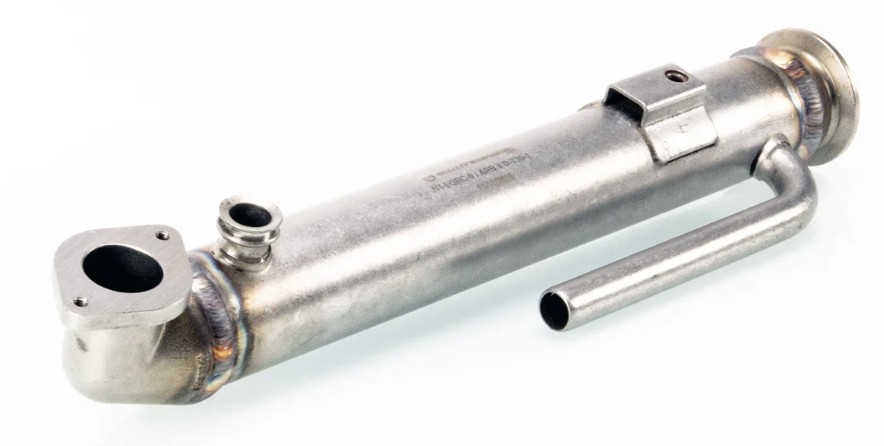
What the EGR Cooler Does
The EGR system cools exhaust gas before it re-enters the intake. Coolant flows through the cooler to pull heat out of the exhaust. When the cooler cracks, plugs, or overheats, coolant can enter the exhaust stream and/or EGR flow can be restricted. That's when problems start.
Common 6.0 EGR Cooler Symptoms
The biggest red flag is coolant loss with white exhaust smoke. That usually means coolant is going somewhere it should not.
Common symptoms include:
- White smoke or steam from the exhaust
- Sweet coolant smell from the tailpipe
- Unexplained coolant loss
- Degas bottle bubbling
- Coolant puking from the degas bottle
- Cooling system pressure
- Low coolant with no obvious external leak
- Rough running after sitting
- Misfire-like start-up
- Wet or coolant-contaminated EGR valve
- P0401, P0402, P0404, or related EGR codes
- P0299 underboost if EGR or airflow issues affect turbo response
Common EGR-Related Codes
P0401 - EGR Flow Insufficient - The PCM commanded EGR flow but did not see enough change.
P0401 does not automatically mean the EGR cooler is leaking. It means the system is not flowing correctly.
Common causes include:
- Sticking EGR valve
- Plugged EGR cooler
- Plugged intake passages
- Clogged MAP port
- Bad EBP data
- Exhaust leak
- Restricted EGR system
P0402 - EGR Flow Excessive - The PCM saw more EGR flow than expected.
A stuck-open EGR valve can cause rough running, smoke, low power, and poor throttle response.
Common causes include:
- EGR valve stuck open
- Carbon holding the valve open
- Sensor data issue
- Intake or exhaust pressure reading issue
P0404 - EGR Control Circuit Range/Performance - The PCM does not like the EGR valve position and/or control response.
If the EGR valve is wet, sludgy, or coolant-contaminated, look harder at the EGR cooler.
Common causes include:
- Sticking EGR valve
- Failed EGR valve
- Wiring or connector issue
- Heavy soot buildup
- Coolant contamination
P0299 — Turbo/Supercharger Underboost - P0299 is not an EGR cooler code, but it can show up when the engine is not moving air correctly.
If P0299 shows up with EGR codes, diagnose the whole intake air system before blaming the turbo.
Common causes include:
- Boost leak
- Sticky VGT vanes
- EGR valve stuck open
- MAP/EBP sensor issue
- Exhaust leak
- Low fuel pressure
- Low ICP
Why 6.0 EGR Coolers Fail
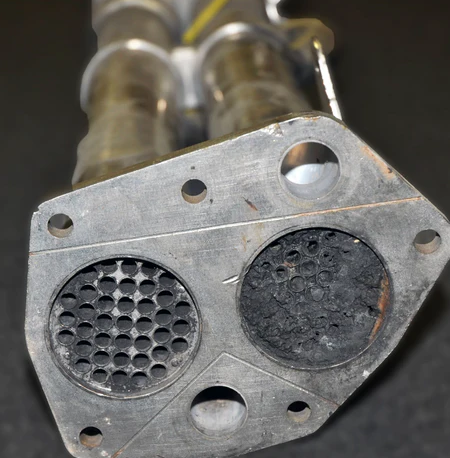
Restricted Oil Cooler - This is the big one. The 6.0 oil cooler feeds coolant flow to the EGR cooler. When the oil cooler plugs, coolant flow drops. Less coolant flow means more heat in the EGR cooler. More heat means a cracked cooler, boiling coolant, and pressure spikes. If the EGR cooler failed, check the oil cooler. Bad EGR coolers usually start with a poorly performing oil cooler.
Dirty Coolant - Casting sand, rust, old coolant, broken-down additives, stop-leak, and debris can plug the oil cooler and EGR cooler. Once coolant flow drops, heat goes up. The EGR cooler usually loses that fight.
Excessive Exhaust Heat - Towing, tuning, high load, sticky VGT vanes, poor cooling-system health, and exhaust restriction can all raise exhaust temps. The EGR cooler lives in that heat. If coolant flow is already weak, heavy load/high EGT can seal its fate.
Cooling-System Overpressure - A failed EGR cooler can cause pressure issues, but head gaskets can look similar. Hard upper hose after sitting, constant degas pressure, repeat coolant puking, or repeat EGR cooler failures mean you need to pressure test before installing more parts.
How to Diagnose a 6.0 EGR Cooler Problem
Step 1: Check the Degas Bottle
Look for:
- Low coolant
- Coolant residue
- Crust around the cap
- Bubbling
- Oil sheen
- Coolant smell
Step 2: Watch for White Smoke
White steam or smoke after warm-up is a major warning sign. If it smells sweet and coolant level is low and/or dropping, suspect coolant entering the exhaust. With this happening, the EGR cooler is high on the list of possible failures.
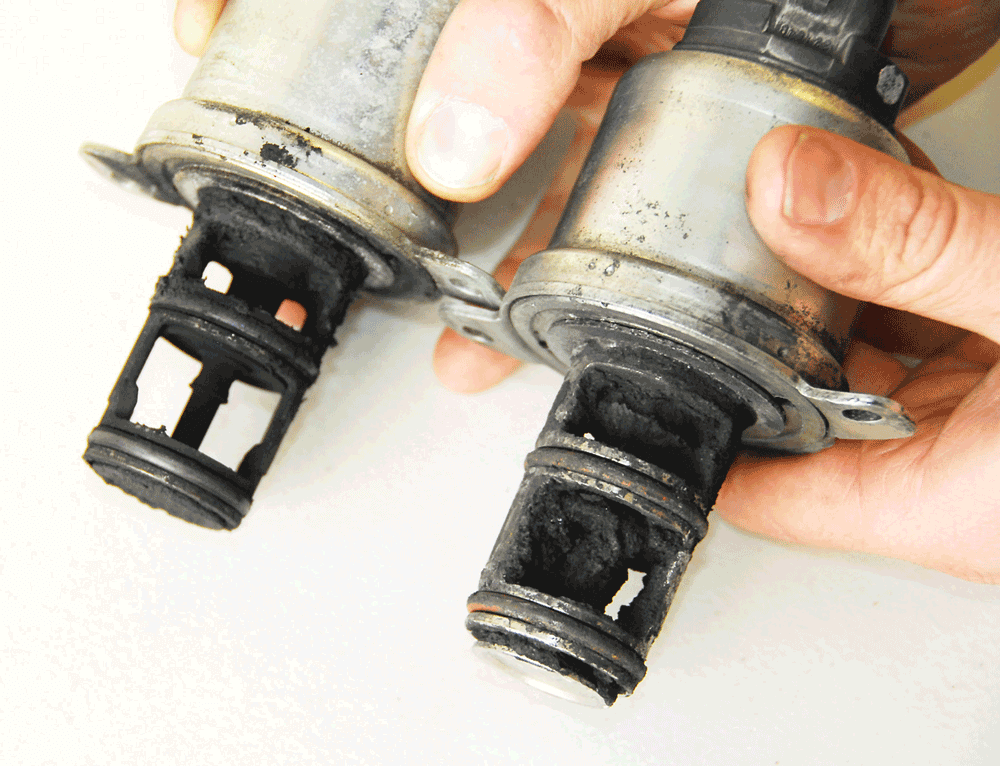
Step 3: Inspect the EGR Valve
Remove the EGR valve and check for:
- Wetness
- Coolant
- Heavy sludge
- Sticky movement
- Carbon buildup
- Rusty or washed-looking deposits
A dry, sooty EGR valve is normal 6.0 behavior. A wet one is not.
Step 4: Check EOT/ECT Delta
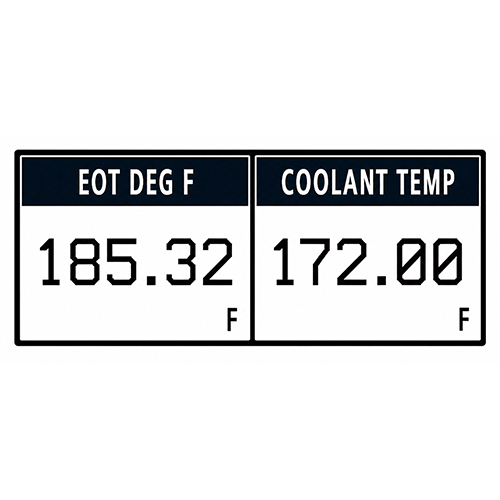
If engine oil temp runs much hotter than engine coolant temp at highway speed, the oil cooler may be restricted. A bad delta usually points toward an oil cooler problem, and, as we said before, a restricted oil cooler is one of the main reasons EGR coolers fail. Generally speaking, a 15 degree differential is considered bad.
Step 5: Pressure Test the Cooling System
Pressure test the system and watch for pressure loss, coolant level movement, or signs of coolant entering the intake or exhaust. If the cooling system builds pressure fast from a cold start or stays pressurized overnight, test for combustion pressure before blaming only the EGR cooler.
Step 6: Check MAP, EBP, and EGR Data
For flow codes, verify sensor data before replacing parts.
Check:
- MAP sensor and hose
- MAP port
- EBP sensor
- EBP tube
- EGR valve command and response
- Intake restriction
- Exhaust leaks
Bad MAP or EBP data can make the PCM think EGR flow is wrong.
How to Fix 6.0 EGR Cooler Problems (after the correct diagnostic steps have been taken)
Replace the Failed EGR Cooler - If the cooler is leaking, replace it. But, verify the correct cooler style before ordering. Early and late 6.0 trucks use different cooler designs. Round is early (usually 2003-2004), square is later.
Address the Oil Cooler - Again, do not replace a failed EGR cooler and ignore a restricted oil cooler. Check EOT/ECT delta and coolant condition. If the oil cooler is plugged, replace it and clean the cooling system before putting the truck back to work.
Clean the Cooling System - Flush contaminated coolant, remove debris, and use the correct coolant strategy. A coolant filtration kit is a smart addition after repair because it helps keep debris from circulating back through the oil cooler and EGR cooler.
Service or Replace the EGR Valve - If the EGR valve is sticking, failed, or contaminated with coolant sludge, fix it. A new cooler will not make a stuck EGR valve work correctly.
Verify the Repair - After repair, monitor:
- Coolant level
- Degas bottle pressure
- EOT
- ECT
- EOT/ECT delta
- EGR command and response
- MAP
- EBP
- Boost
Common Parts for 6.0 EGR Cooler Repair
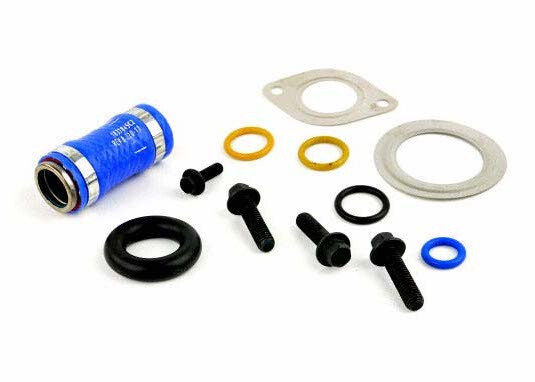
Depending on diagnosis, common parts include:
- Bullet Proof Diesel Round 6.0L EGR Cooler https://www.riffraffdiesel.com/bullet-proof-diesel-round-6-0l-egr-cooler/
- Bullet Proof Diesel H-Core Square 6.0L EGR Cooler https://www.riffraffdiesel.com/bullet-proof-diesel-square-6-0l-egr-cooler-03-07/
- Ford 6.0L Oil Cooler Kit 03–07 https://www.riffraffdiesel.com/oil-cooler-kit-03-07-6-0l/
- Riffraff Diesel Coolant Filtration System / Filter Kit 03–07 https://www.riffraffdiesel.com/riffraff-diesel-coolant-filtration-system-filter-kit-03-07/
- EGR Cooler Gasket Install Kit 03–07 — Basic https://www.riffraffdiesel.com/egr-cooler-gasket-install-kit-03-07-basic/
- EGR Cooler Gasket Install Kit 03–07 — Complete https://www.riffraffdiesel.com/egr-cooler-gasket-install-kit-03-07-complete/
- EGR Cooler to Oil Cooler Inlet Connector 03–07 6.0L https://www.riffraffdiesel.com/egr-cooler-to-oil-cooler-inlet-connector-03-07-6-0/
- Degas Coolant Bottle Cap https://www.riffraffdiesel.com/degas-coolant-bottle-cap/
- MAP Sensor 03–07 https://www.riffraffdiesel.com/map-sensor-03-07/
- MAP Sensor Pigtail 99–07 https://www.riffraffdiesel.com/map-sensor-pigtail-99-07/
- Exhaust Back Pressure Sensor — 97–04 https://www.riffraffdiesel.com/exhaust-back-pressure-sensor-ebp-97-04/
- Exhaust Back Pressure Sensor — 05–07 https://www.riffraffdiesel.com/exhaust-back-pressure-sensor-ebp-05-07/
- Exhaust Back Pressure Tube — 03–05 https://www.riffraffdiesel.com/exhaust-back-pressure-tube-ebp-03-05/
- Exhaust Back Pressure Tube — 05–07 https://www.riffraffdiesel.com/exhaust-back-pressure-tube-ebp-05-07/
- Exhaust Back Pressure Tube Manifold Fitting 94–07 https://www.riffraffdiesel.com/exhaust-back-pressure-tube-manifold-fitting-94-07/
- ICP / EBP Pigtail Harness 94–07 — Motorcraft https://www.riffraffdiesel.com/icp-ebp-pigtail-harness-94-07/
- ICP / EBP Pigtail Harness 1994–2007 — Delphi https://www.riffraffdiesel.com/icp-ebp-pigtail-harness-1994-2007/
Final Thoughts
A 6.0L EGR cooler problem is usually part of a bigger cooling-system problem.
- The cooler may be cracked.
- The oil cooler may be restricted.
- The coolant may be dirty.
- The EGR valve may be stuck.
- The sensor data may be wrong.
- The cooling system may be over-pressurizing.
Start with the symptoms. Pull the codes. Check the coolant. Inspect the EGR valve. Watch EOT/ECT delta. Pressure test the system. Then fix the cause, not just the part that finally gave up.