The Ford “Switch Fire” Recall Family: 99V-124, 05S28 (05V-017), 07V-078, 07V-336, and 09V-399
Posted by Adam Blattenberg on Feb 20th 2026
If you’ve ever heard an old Ford guy say “check that cruise control switch before it checks your garage for smoke detectors,” this is what they’re talking about.
Easilly the most commonly delt with recall for early Super Duty owners. A recall that like so many others, started as something small and slowly grew to something massive with several related recalls being released to over 4.5 million vehicle owners (some sources claim closer to 14 million).
These recalls all orbit the same basic concern: the Speed Control Deactivation Switch (SCDS) (aka cruise control deactivation switch / brake pressure switch) mounted on (or near) the brake master cylinder. Under certain conditions it can leak internally, overheat, smoke/burn, and in worst cases start an underhood fire—and yes, some of the concern is that it can happen even when the vehicle is parked. Before the issue was fully remedied, over 550 vehicle fires were credited to this switch made by Texas Instruments (but don't blame Texas Instruments, from what we can see, the switch wasn't designed for what Ford used it for).
What part is failing, and why does it matter?
The SCDS is part of the cruise control system’s “I’m braking—shut cruise off” logic. The issue described across these campaigns is some combination of:
- Internal leakage (often involving brake fluid migration/contamination)
- Overheating at the switch/connector
- Potential smoke/burning/fire in the engine compartment
The recall timeline (why there are so many numbers)
Quick cheat sheet:
Units affected (by campaign, most vehicles were covered by multiple campaigns)
- 99V-124: 262,695
- 05V-017 (Ford 05S28): 738,490
- 07V-078 (Ford 05S28): 155,584
- 07V-336 (Ford 05S28): 3,600,000
- 09V-399 (Ford 09S09): approx 4,500,000
Broad Vehicle Affected List:
- 1992–2003: Ford Econoline (E-150, E-250, E-350, E-450)
- 1992–2003: Ford Crown Victoria, Mercury Grand Marquis
- 1992–2002: Ford Explorer, Mercury Mountaineer
- 1992–1998: Lincoln Town Car
- 1993–2003: Ford F-150, F-250, F-350, F-450, F-550
- 1993–1996: Ford Bronco
- 1993–1995: Ford Taurus SHO
- 1993–1998: Lincoln Mark VIII
- 1994: Mercury Capri
- 1995–2003: Ford Windstar
- 1995–1997 & 2001-2003: Ford Ranger
- 1997–2002: Ford Expedition
- 1998–2002: Lincoln Navigator
- 2000–2003: Ford Excursion
- 2003–2004: Ford F-150 Lightning
1. 99V-124 (early chapter)
This earlier campaign targeted certain early-’90s Ford/Lincoln/Mercury vehicles (not trucks), but it’s part of the same overall SCDS/fire discussion. Reported as 262,695 potentially affected units under that campaign.
2. 05S28 / 05V-017 (truck expansion #1)
This is one of the best-known truck/SUV phases. NHTSA lists 738,490 potentially affected units, including:
- 2000 Expedition
- 2000 F-150
- 2001 F-150 SuperCrew
- 2000 Lincoln Navigator
3. 07V-078 (another small bump)
This is another chunk under the same Ford campaign umbrella, with 155,584 potentially affected units. The NHTSA doc calls out (among others) 2003 F-150, 2003 F-250/F-350 Super Duty, 2003 Excursion, etc.
4. 07V-336 (the big broad net)
This is the “wow that’s a lot of vehicles” moment: 3,600,000 potentially affected units, and it explicitly states the switch may leak internally and then overheat/smoke/burn, leading to an underhood fire.
5. 09V-399 (the "stop messing around and cover them all" move)
This last action is huge: about 4.5 million potentially affected vehicles (per Ford’s Part 573 defect filing).
Notably, Ford explains it’s including vehicles not previously recalled that still use the Texas Instruments SCDS, in part to avoid future concerns about fire risk.
What problems are associated with these recalls?
Across these campaigns, the “problem statement” is consistent:
- Switch can overheat
- Smoke/burning at the switch/connector
- Underhood fire risk (in some cases even when parked, depending on configuration and conditions)
And the nasty part: you might not get warning signs. Plenty of trucks act totally normal… until they burn the garage down.
How do I know if it applies to my truck?
Don’t guess by model year alone. These campaigns were applied by VIN.
Do this instead:
- Run your VIN on NHTSA’s recall lookup (fastest “is it open?” check). Found here: https://www.nhtsa.gov/recalls
- Run your VIN on Ford’s recall page (often shows more manufacturer detail). Found here: https://www.ford.com/support/recalls-details
- Or, call your dealership.
Pro tip: If you bought the truck used, assume nothing. These recalls are old enough that paperwork gets lost and owners change.
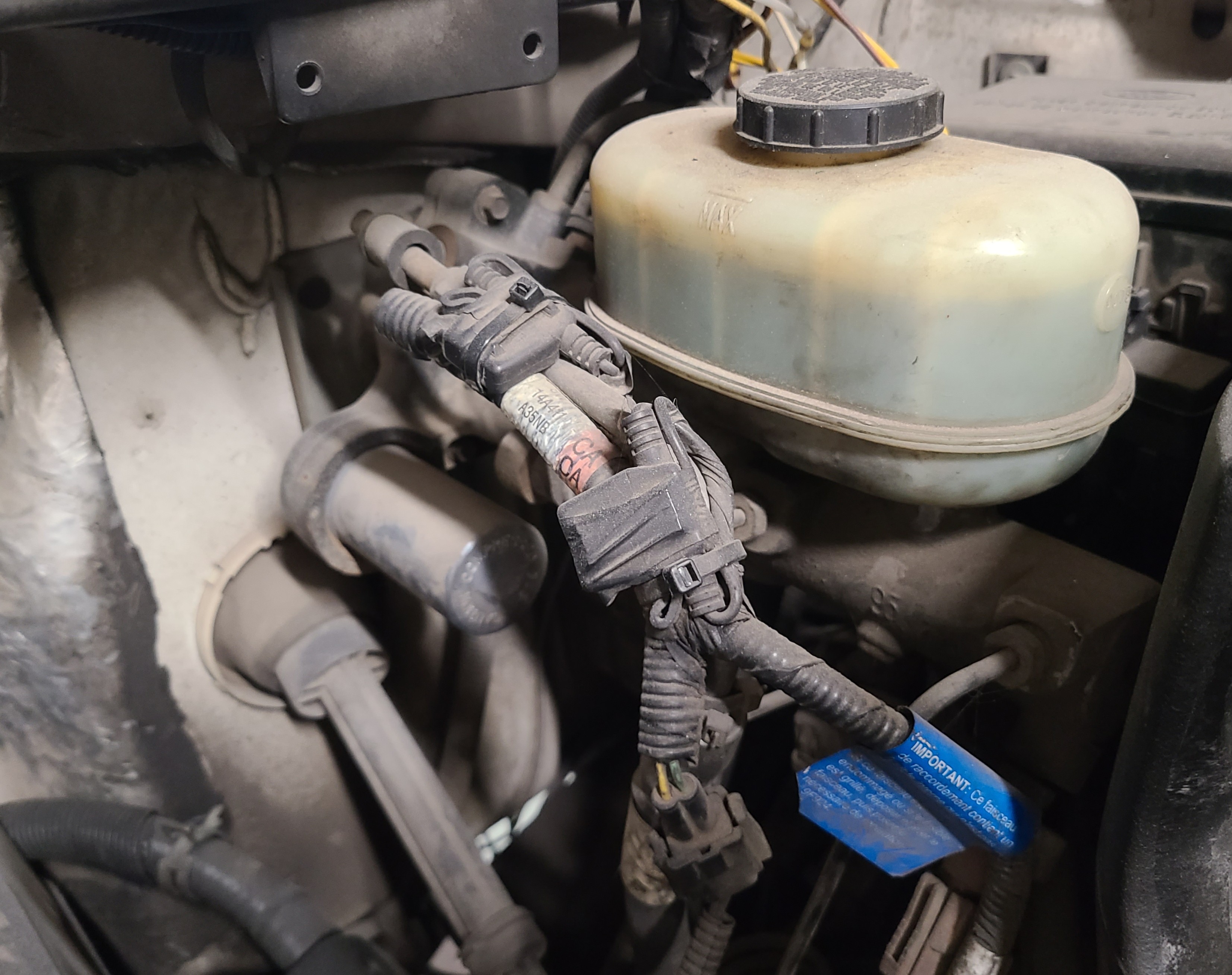
A quick check to see if your's has been fixed already (although always confirm with a dealership), take a look at the brake master cylinder. If you see one, often times two, fuese hastly fastned to it, you're likely good.
How was it fixed?
The common fix: Fused Jumper Harness
Ford’s remedies evolved over time, but the big theme is: add a fused jumper harness (so an overcurrent condition can’t cook the circuit), and replace the switch if it shows evidence of leakage/contamination.
Ford service instructions for 05S28 describe:
Inspecting the SCDS connector for brake fluid contamination
- If clean: install the fused jumper harness
- If contaminated: additional steps, including switch replacement (and related connector inspection/cleaning guidance)
So the “real” repair outcome depends on what’s found when it’s inspected—some vehicles get the harness only, others get the harness and a new switch.
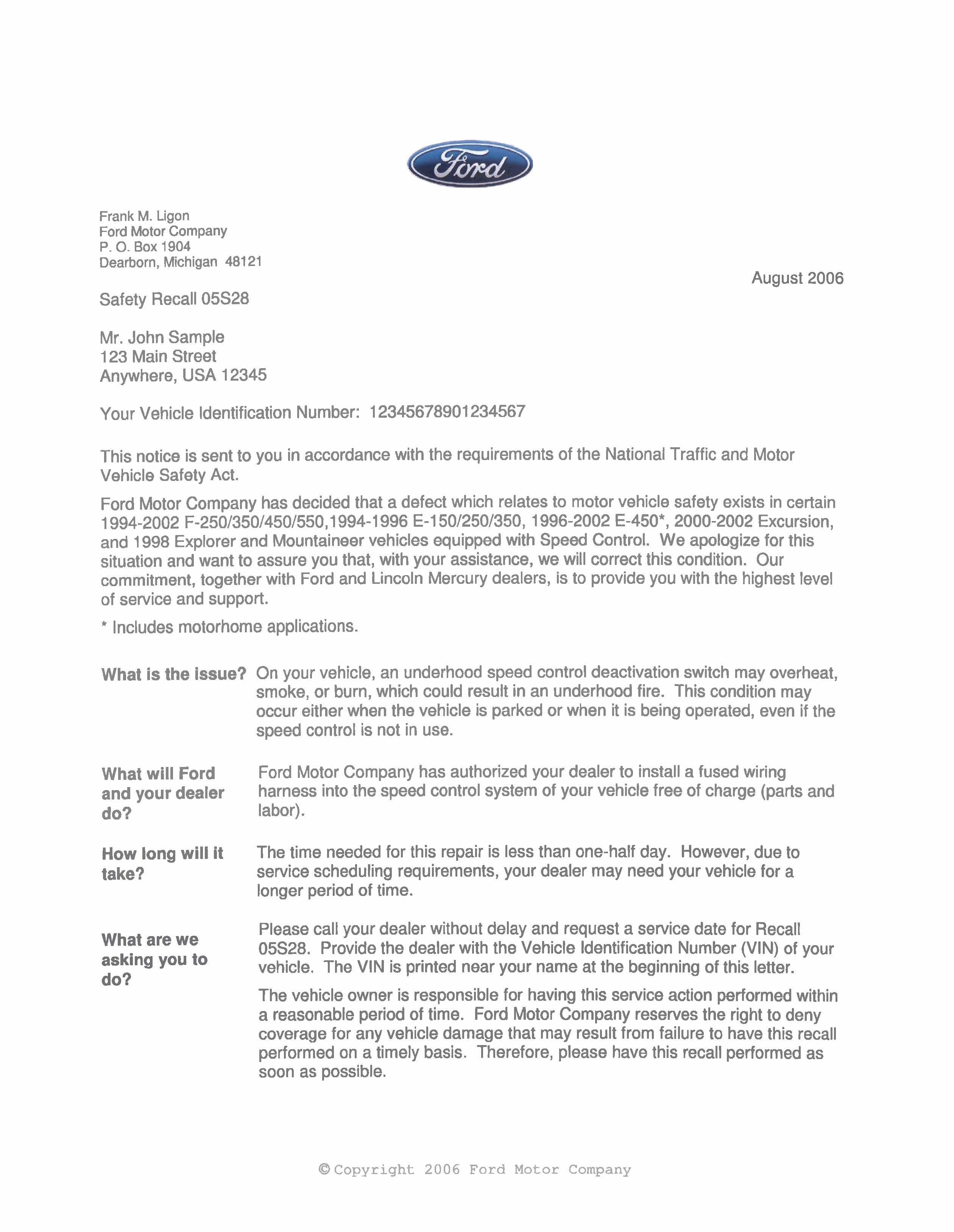
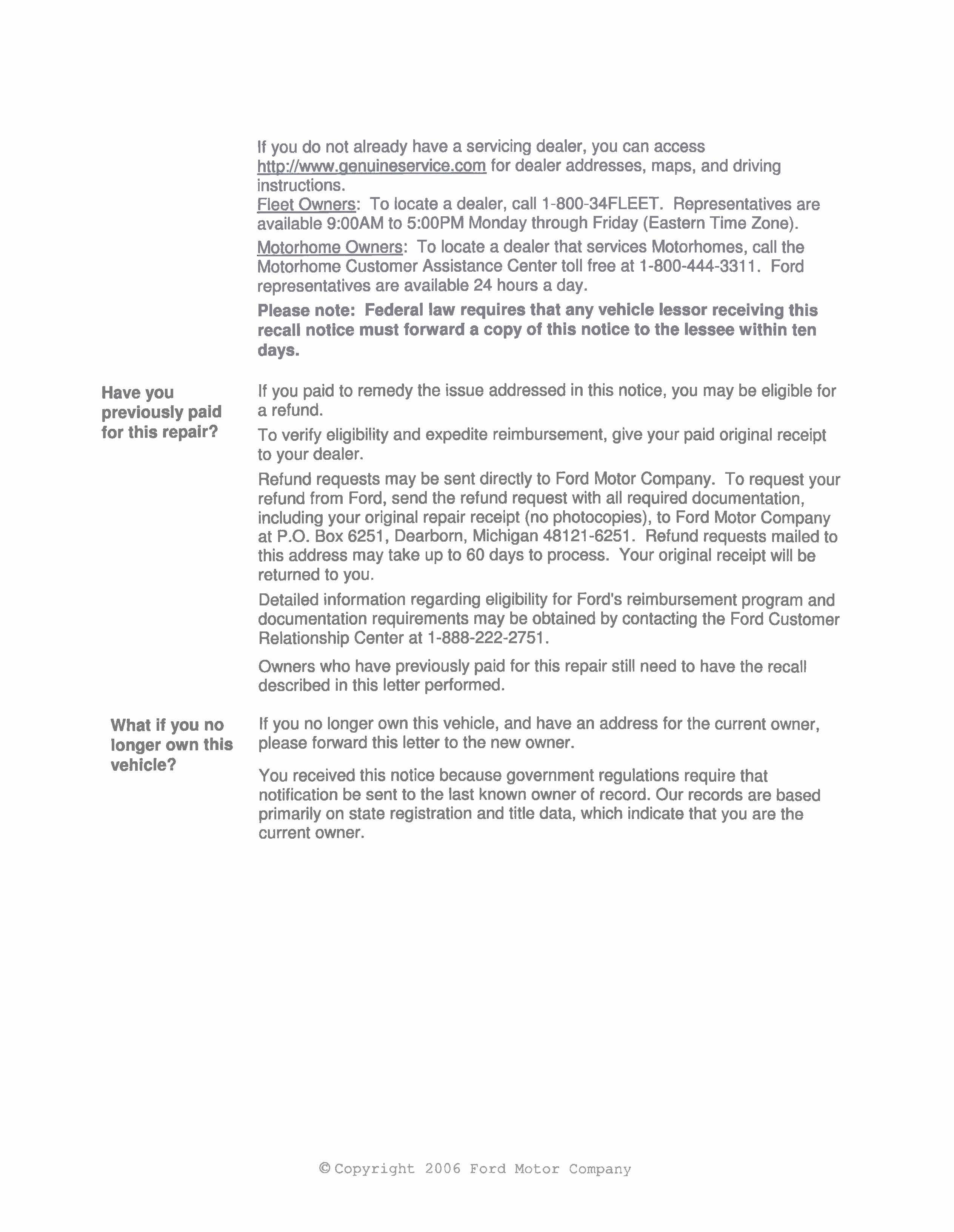
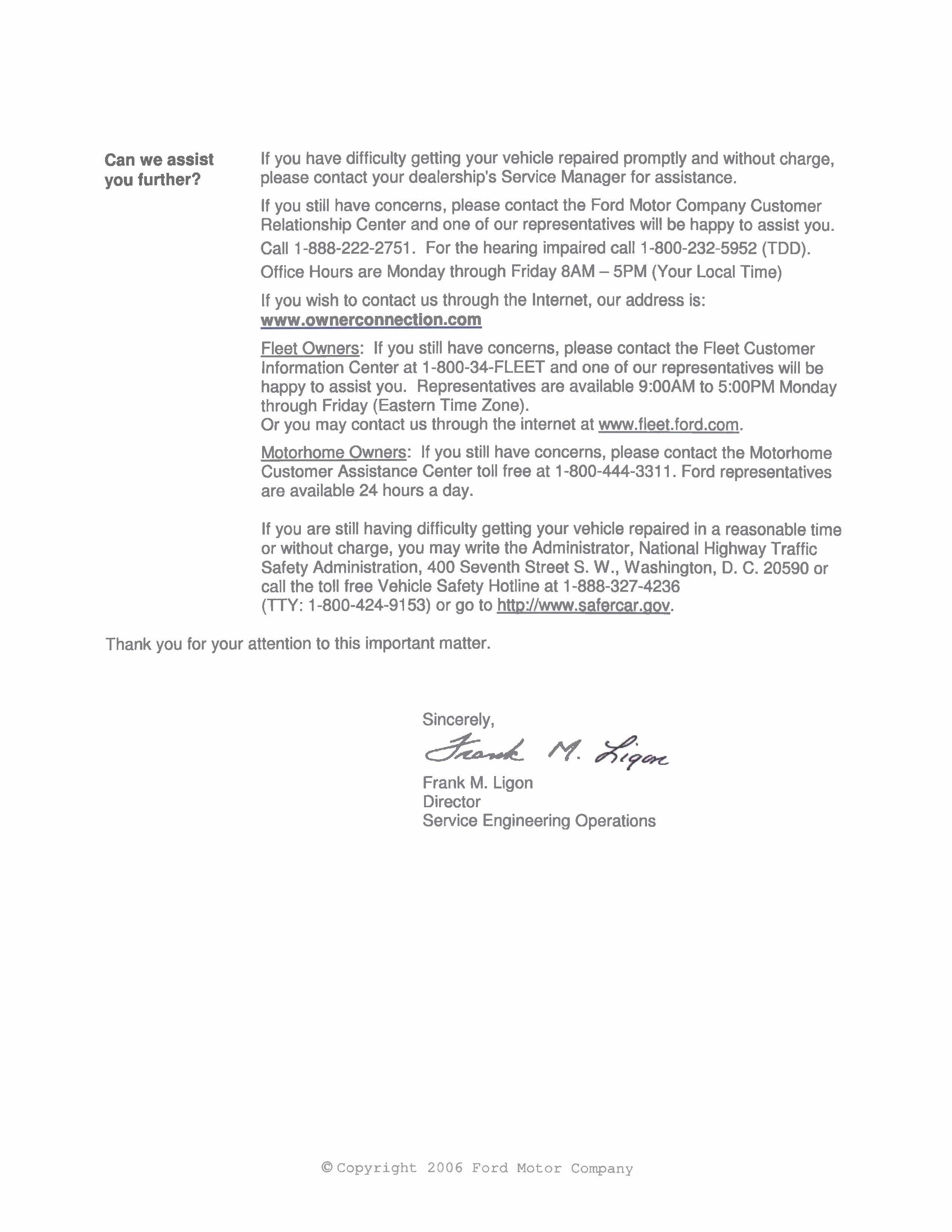
Owner Notice Sample: