Riffraff/Eaton 7.3 Powerstroke HPOP JIC Lines - What's the real difference?
Aug 12th 2026
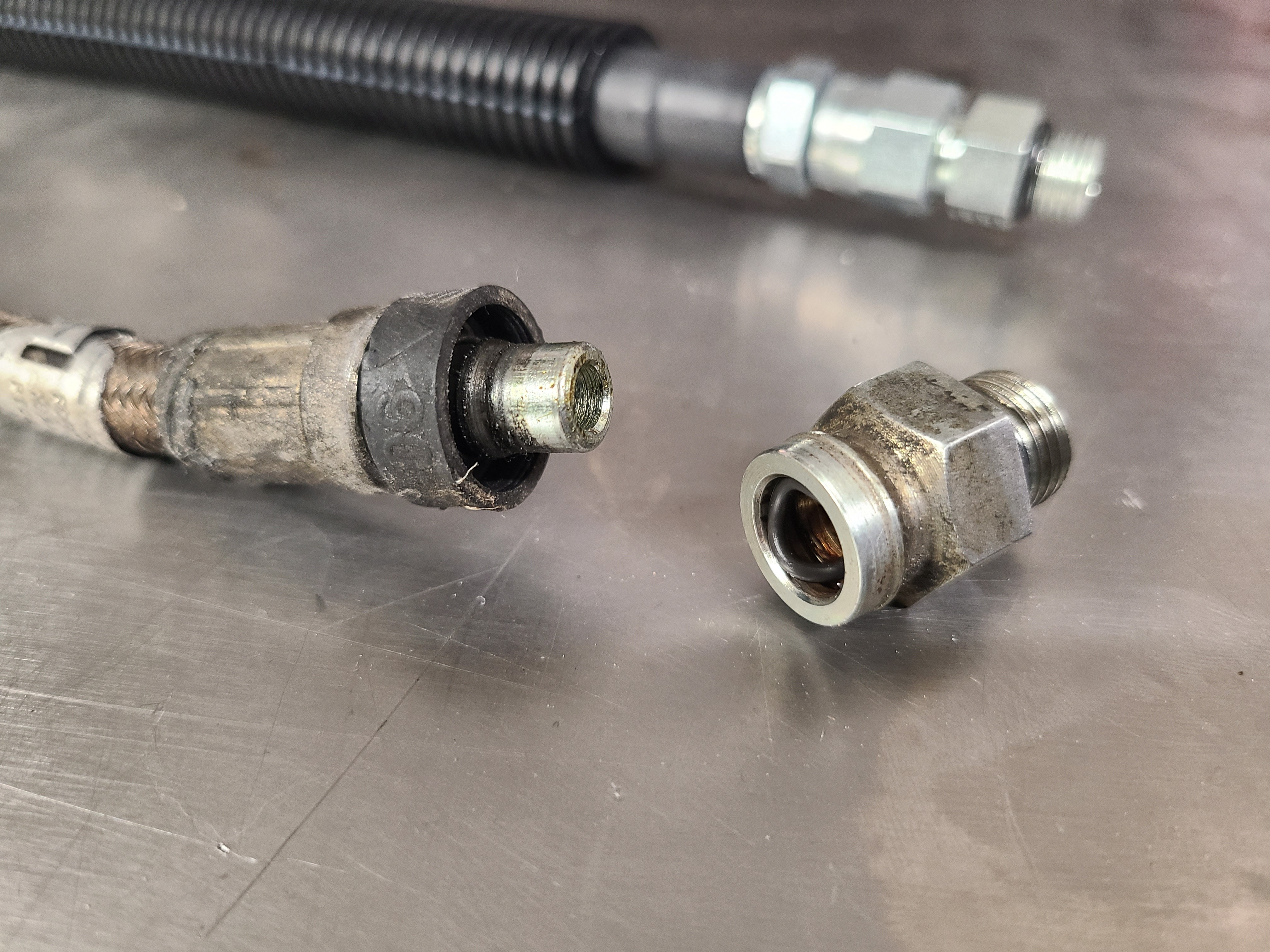
The factory 1999–2003 7.3 Powerstroke HPOP lines use quick-connect fittings at the cylinder heads and high-pressure oil pump. They worked, but after more than 20 years of heat, vibration, oil exposure (on the outside is what degrades them), and pressure cycling, those connections can become a source of leaks in the valley.
And pressure is only part of the story. A 7.3 HPOP line can see more than 3,000 psi, but it also sees that pressure rise and fall thousands of times while the engine runs. That repeated pulsing is hard on hose liners, reinforcements, crimps, and fittings. A hose that can simply “hold 3,000+ psi” isn’t necessarily a good HPOP hose.
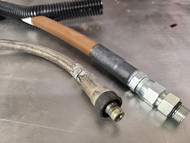
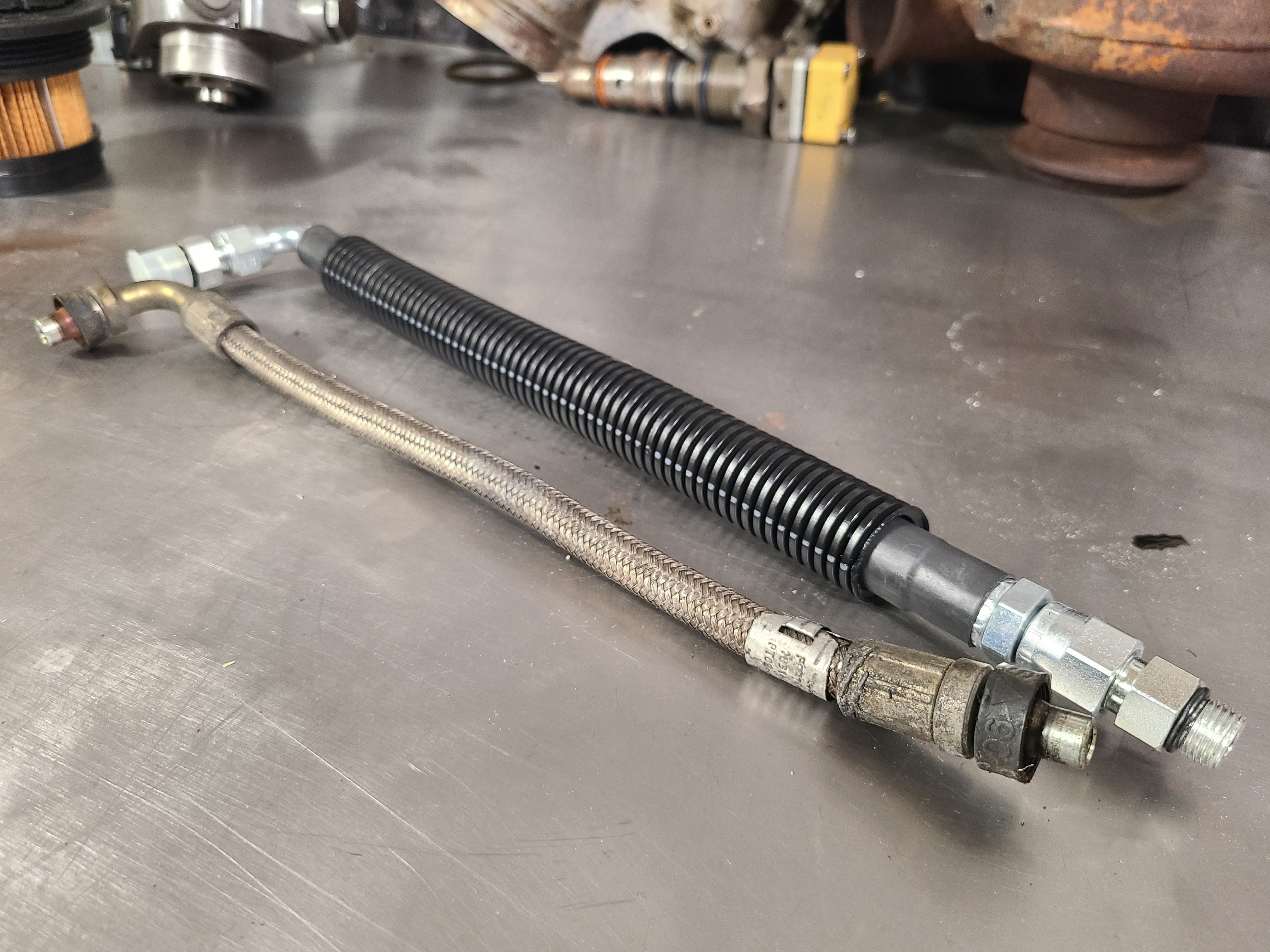
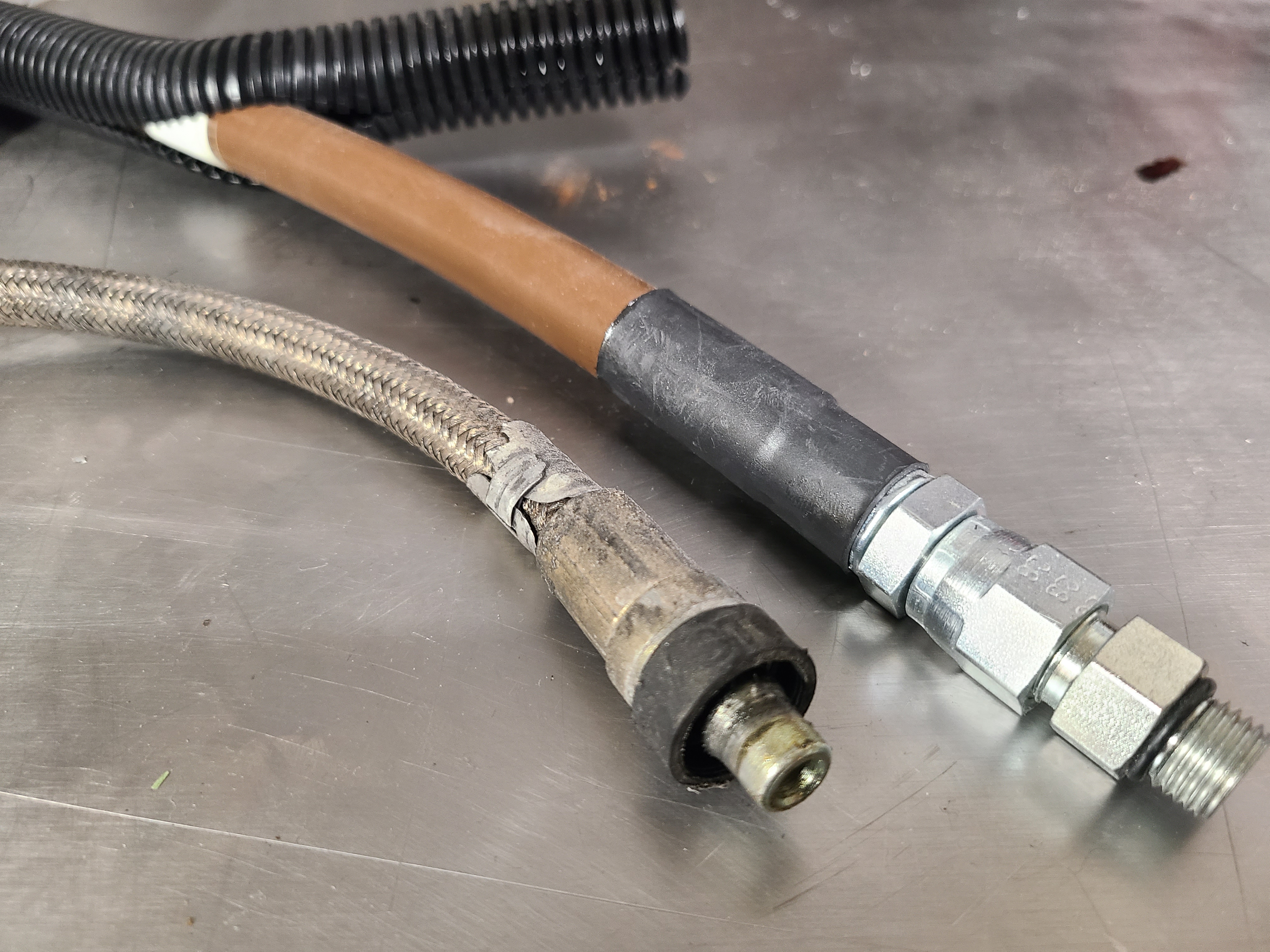
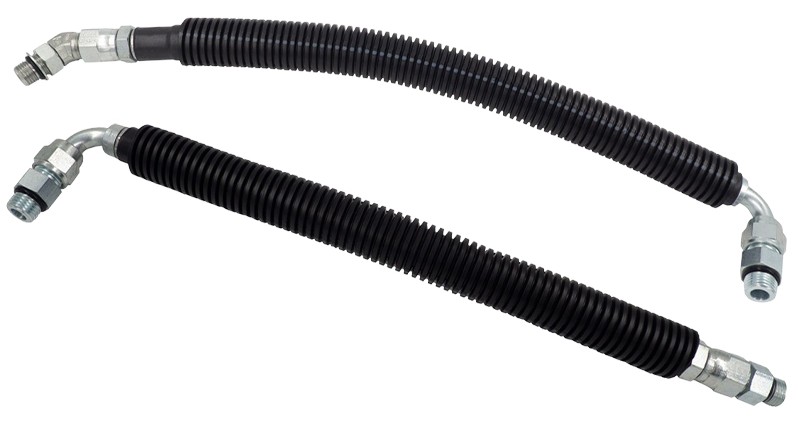
Our HPOP JIC Lines replace the original factory hoses with an OEM Eaton PTFE hose and threaded JIC adapter setup, designed specifically by Eaton (originally design for International) for the 7.3 Powerstroke's HEUI system. The hose uses an extruded Teflon resin liner, stainless-steel wire reinforcement, and a fire-retardant silicone outer cover. HPOP and cylinder-head adapters are included.
Parts Links:
HPOP JIC Line - Passenger Side Head 99-03 - https://www.riffraffdiesel.com/hpop-jic-line-passenger-side-head-99-03/
HPOP JIC Line - Driver Side Head 99-03 - https://www.riffraffdiesel.com/hpop-jic-line-driver-side-head-99-03/
Why the Eaton hose matters
There are plenty of ways to build a high-pressure oil line. They aren’t all equal.
Standard hydraulic hose
A conventional rubber hydraulic hose may carry enough pressure on paper, but pressure rating alone doesn’t tell the whole story.
The HPOP system constantly pulses. Pressure climbs, drops, climbs again, over and over for as long as the engine runs. That repeated expansion and contraction fatigues the liner, reinforcement, and crimped ends.
Hydraulic hose designed for slower or more consistent industrial pressure may not be intended for that combination of high pressure, rapid cycling, engine heat, and vibration.
That’s why having a local hydraulic shop make a hose based only on working-pressure rating isn’t necessarily an upgrade.
Bare stainless-braided PTFE hose
PTFE and stainless braid are better suited to heat and pressure, but bare braid creates another problem.
It’s abrasive.
Let exposed stainless braid vibrate against wiring, another hose, or a bracket long enough and it can start wearing through whatever it touches like a hacksaw. The tight 7.3 engine valley doesn’t leave much room for routing mistakes either.
Our Eaton line still gets the strength of stainless reinforcement, but the braid is covered by a fire-retardant silicone outer jacket. That protects the hose and the parts around it.
Oversized braided hose
Bigger hose sounds better. Not always.
Increasing hose diameter also increases bulk and usually increases minimum bend radius. In the cramped HPOP valley, that can make routing more difficult and put unnecessary side-load on fittings.
Our line stays closer to the factory layout rather than using hose size as the selling point.
Factory-style replacement hoses
An OE-style replacement may use excellent hose construction, but if it retains the original quick-connect fittings, you’re still putting the same basic connection design back into the truck.
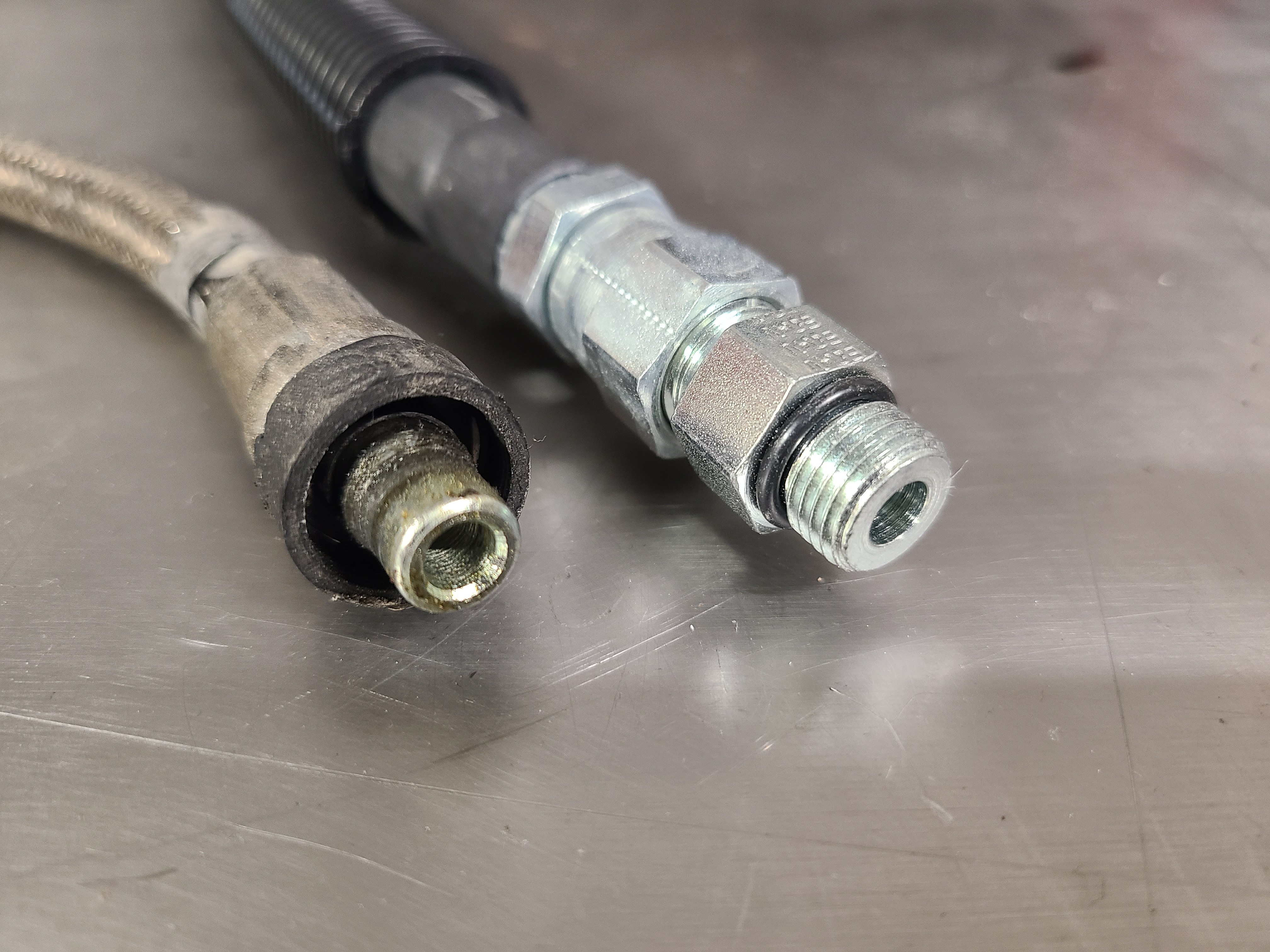
Our line keeps the Eaton hose quality while replacing the quick-connect arrangement with threaded JIC fittings. That’s the bigger upgrade.
Why switch to JIC?
A JIC connection is threaded, mechanical, and easy to inspect. Instead of relying on the aging quick-connect arrangement, the hose is tightened directly to the adapter. That makes it a good choice when replacing a leaking HPOP line or already working around the pump, IPR, reservoir, or fittings.
You fix the hose and eliminate the old connection at the same time.
Key details
- Fits 1999–2003 7.3L Powerstroke
- OEM Eaton hose
- Extruded Teflon® PTFE liner
- Stainless-steel wire reinforcement
- Fire-retardant silicone outer cover
- Threaded JIC conversion
- HPOP and cylinder-head adapters included
- Each side sold separately
Installation
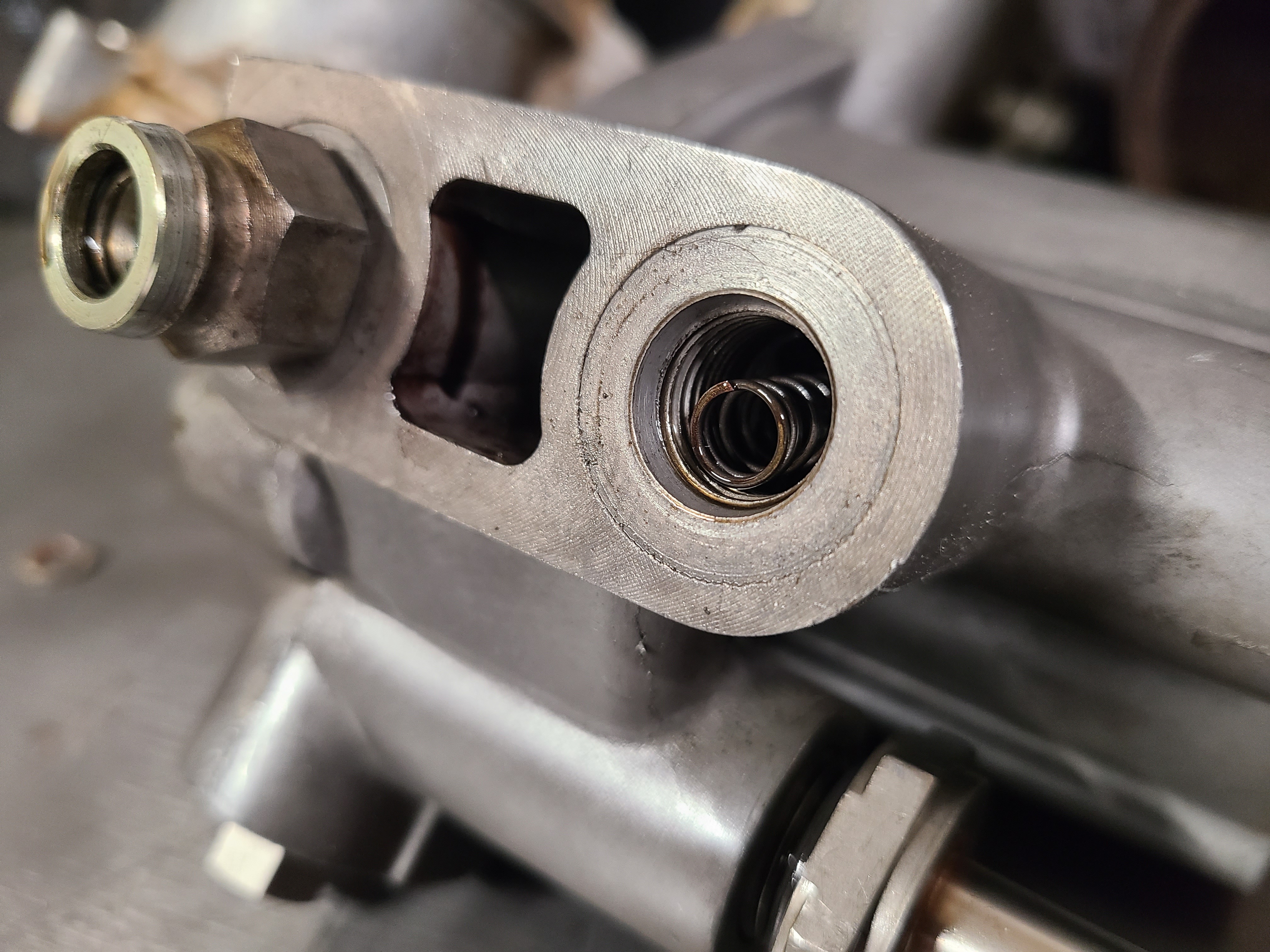
Important note: The check-plate springs underneath the HPOP outlet fittings must be removed when installing the JIC conversion. We also recommend Loctite 680 on the HPOP outlet fittings.
- Remove the factory hose with the correct disconnect tool, then remove the old fittings from the driver-side head and HPOP.
- Remove the HPOP check spring, install the new JIC adapters with Loctite 680 where specified, and route our Eaton hose from the driver-side head to the forward HPOP fitting.
- Keep the hose clear of wiring, brackets, and anything that could rub against it.
- Last, let the truck idle for 5–10 minutes, check both fittings for leaks, then drive it and inspect everything again once the engine is hot.
Torque specs
Cylinder-head fitting: 30 ft-lb, or until fully seated
HPOP fitting: 25 ft-lb
Hose-end nuts: 20 ft-lb
Bottom line
A good 7.3 HPOP hose needs to do more than survive a high static pressure number. It has to handle constant pressure pulses, engine heat, vibration, tight routing, and years of service without damaging itself or the parts around it.
Our Eaton JIC lines combine a PTFE liner, stainless reinforcement, protective silicone outer cover, factory-style routing, and threaded JIC fittings in a hose built for the environment it actually lives in.
For an aging or leaking 1999–2003 7.3 Powerstroke driver-side HPOP line, we believe this is a much better way to fix the problem than simply replacing the old hose with another version of the same thing.
Disclaimer: The information provided on this blog is for informational purposes only. We share our knowledge and experience, but we are not liable for any damages, injuries, or losses that may occur as a result of using this information. Situations are rarely cut and dry in the automotive world. Your situation will likely be somewhat different than what we describe here. Use your best judgment and always consult a qualified professional for automotive repairs and modifications. Your safety is your responsibility.