Diagnosing HPOP Issues on the 7.3L & 6.0L Powerstroke's
Aug 30th 2025
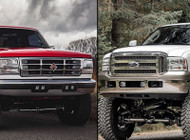
The High-Pressure Oil Pump (HPOP) is the heart of the HEUI (Hydraulically Actuated, Electronically Controlled Unit Injector) fuel injection system used on both the 7.3L and 6.0L Powerstroke. When the HPOP system fails or develops leaks, it can lead to hard starts, no-starts, rough running, and power loss. On both the 7.3L and 6.0L Powerstroke, HPOP issues almost always manifest as hard/no-start conditions, low ICP pressure, and high IPR duty cycles. How the systems work is fairly similar; the key difference is where they leak: the 7.3L is prone to external leaks (and pump wear), while the 6.0L suffers from internal rail/component leaks. Here's a list of common symptoms associated with HPOP failures, their causes and fixes as well as how to prevent them.
Note: What we've listed are the most common things. It's nearly impossible to say exactly what your specific issue may be, it may be a few things and it may be something completely different than what we listed. Again, these are the most common items. Diagnostic ability is a must here. Use this guide to get you pointed in the right direction.
Key Patterns to Remember
- 7.3L: If it starts cold but not hot: Usually IPR issues (Foreign Object Debris), injector O-ring failures, injector poppet stuck, or rarely HPOP wear/ internal issues.
- 6.0L: If it cranks but won’t build ICP: Usually IPR issues, oil leaks, STC fitting, HPO rail seal leak, standpipes/dummy plugs, or branch tube seals.
- Both engines: If ICP is below 500 PSI during cranking: The high-pressure system is bleeding off somewhere, IPR is stuck or the HPOP is suspect.
Symptoms, Causes and Fixes:
7.3L Powerstroke
Hard start when hot:
- Internal HPOP wear (low output when warm) - Worn HPOP. Replace HPOP
- IPR valve leaking/sticking - Clean or replace IPR valve or O-rings (most commonly, the IPR is just contaminated and can be cleaned)
- Injector O-rings leaking under heat expansion - Failed O-rings. Replace injector O-rings
Extended crank before start (hot or cold):
- Low oil in HPOP reservoir (drain-back issue) - Failed check valve or gasket. Repair/replace block check valve or gasket
- Leaking ICP sensor (visible oil leaking in electrical plug is common) or bad signal - Replace ICP sensor
- Air intrusion in high-pressure system - Leaking HPOP lines. Find leak and repair
White smoke on startup:
- Low ICP pressure (fuel not atomizing) - Test ICP during cranking. Worn pump, oil leak, or bad ICP sensor. More diag needed (see Diagnostic Procedures below)
- Weak HPOP or high-pressure leak - Fix leak and/or replace HPOP
Loss of power under load:
- Weak HPOP not maintaining commanded pressure - Replace/rebuild HPOP
- IPR valve sticking - Clean IPR valve or replace. Contamination and O-ring failure is very common.
- ICP sensor reading low - Replace ICP sensor once ruled faulty. More diag is needed (see Diagnostic Procedures below)
6.0L Powerstroke
NOTE:
- 2003-2004 pickups used a aluminum HPOP design.
- Around 2004.5 was a transition period for pickups. Either style of pump may have been used. Some later engines also used Tube Style Rails which were scrapped by 2005.
- 2005-2007 pickups used the cast-iron design, Branch Tube, Standpips, and Dummy Plugs and STC fittings were introduced.
- *All 2005 model year Excursions used the 2004 setup. By 2006, all Excursions had transitioned to the 2005-2007 setup used in the pickups. We will reference pickup style setups by year below.
No start when hot:
- STC fitting failure (2005+) - Replace STC with upgraded part
- Branch Tube seal leaks (2005+) - Replace Branch Tube seals
- Standpipe/dummy plug O-rings leaking (2005+) - Replace standpipe/dummy plug seals
- HPOP internal failure (most common with 2003–2004 cast iron HPOP) - Replace HPOP
- Tube Style oil rail O-ring failure (some 2004-2004.5 transition year models only) - Replace nipple cup O-rings
- IPR O-ring failure (most common with 2003-2004 cast iron HPOP) - replace O-rings
Extended crank before start:
- ICP pressure below 500 PSI during crank - More diag needed. Potential HPOP failure, oil leak, ICP or IPR issue
- IPR valve stuck open or leaking - Contaminated or failed IPR. Clean or repair as necessary
- ICP sensor failure (most common with 2003-2004 cast iron HPOP) - Replace ICP sensor (note: make sure the sensor has actually failed. Leaks can create false positives. Oil is often found in the electrical connector when ICP has failed)
- HPOP failure (most common with 2003-2004 cast iron HPOP) - Replace pump
- Tube Style oil rail O-ring failure (some 2004-2004.5 transition year models only) - Replace nipple cup O-rings
- Standpipe/dummy plug O-rings leaking (2005+) - Replace standpipe/dummy plug seals
- STC fitting failure (2005+) - Replace STC with upgraded part
Engine stalls, restarts after cooling:
- Internal HPOP leak worsens at operating temp - Air test system and replace leaking components.
- Standpipe/dummy plug leaks when hot - Air test system and replace leaking components.
Surging or misfiring under load:
- ICP pressure is unstable due to leaking seals or faulty IPR (most common with 2003-2004 cast iron HPOP) - Clean or replace IPR or O-rings
- Weak HPOP - Replace HPOP
- Tube Style oil rail O-ring failure (some 2004-2004.5 transition year models only) - Replace nipple cup O-rings
Audible high-pressure oil leak (hissing under valve cover with air test):
- Injector top O-rings leaking - Replace Injector O-rings
- Standpipe/dummy plug leaks - Replace standpipes/dummy plug seals
No start, any temperature:
- STC fitting failure (2005+) - Replace STC fittings with upgraded part
- Standpipe/Dummy plug leak (2005+) - Replace seals
- ICP Sensor Leaking Oil - Replace ICP
- IPR Valve Failure, ICP wont build above 500psi - Clean, reseal, or replace IPR
Common Related DTCs
7.3L
- P1211 – ICP not as desired (too high/low).
- P1212 – ICP pressure out of range.
- P1280/P1281 – ICP electrical circuit low/high.
6.0L
- P2284 – ICP sensor circuit range/performance.
- P2285 – ICP sensor circuit low.
- P2286 – ICP sensor circuit high.
- P2290 – ICP too low (engine won’t start).
- P2291 – ICP too low during cranking.
Diagnosing Procedures
Check oil level & condition
- Low engine oil level or aerated oil can mimic HPOP failure.
- Dirty and high mileage oil reduces injection performance.
Cranking ICP test
- 7.3L Needs roughly 500 PSI minimum to start.
- 6.0L Needs 500 PSI minimum; monitor IPR duty cycle (should not exceed ~85%).
Commanded vs. Actual ICP
- If actual lags behind commanded by more than 200 PSI during cranking, suspect oil leak or weak pump.
IPR valve test
- Unplug ICP sensor – if engine starts, ICP sensor may be faulty.
- Manually commanding IPR closed (with scan tool) helps confirm leakage vs. bad sensor.
Air test the high-pressure system (6.0L)
- Apply shop air (~100 PSI) to ICP port with IPR commanded closed.
- Listen for leaks in these areas:
- HPOP J Tube to branch tube/standpipe leaks.
- Under valve cover. Injector O-rings.
- Back of engine. HPOP or STC fitting.
Reservoir check (7.3L)
- Verify HPOP oil reservoir stays full after sitting overnight. If empty, oil drain-back is occurring (suspect feed line check valves, injector poppert stuck or reservoir gasket as cause).
Prevention & Best Practices
- Use quality oil (15W-40 or 5W-40 for cold climates).
- Regular oil changes (every 3 to 5,000 miles).
- Use a quality fuel and oil additive
- Keep fuel and oil filters fresh to reduce injector strain.
- Update weak links – install Ford’s updated STC fitting kit, standpipes, and dummy plugs on 6.0L.
- Monitor ICP & IPR duty cycle with a scan tool if drivability changes.
- Check HPOP reservoir (7.3L) periodically for drain-back.
***Disclaimer: The information provided on this blog is for informational purposes only. We share our knowledge and experience, but we are not liable for any damages, injuries, or losses that may occur as a result of using this information. Situations are rarely cut and dry in the automotive world. Your situation will likely be somewhat different than what we describe here. Use your best judgment and always consult a qualified professional for automotive repairs and modifications. Your safety is your responsibility.