Blown Boots: Why It Happens; How To Prevent It; And How To Install New Boots Correctly
Dec 5th 2025
Installing intercooler boots—often called CAC (Charge Air Cooler) boots—is one of the most common troubleshooting requests we receive, especially from owners dealing with repeated boot blowoffs or persistent boost leaks. It’s an understandably frustrating issue, but the real solution is far simpler than most expect. In short: keep every mating surface completely clean and fully tighten your T-bolt clamps (and never rely on worm-gear/screw clamps). When the pipes are oil-free and the clamps are properly torqued, CAC boots generally stay exactly where they’re supposed to. Let’s take a closer look at why these failures happen and how a proper installation technique prevents them from returning.
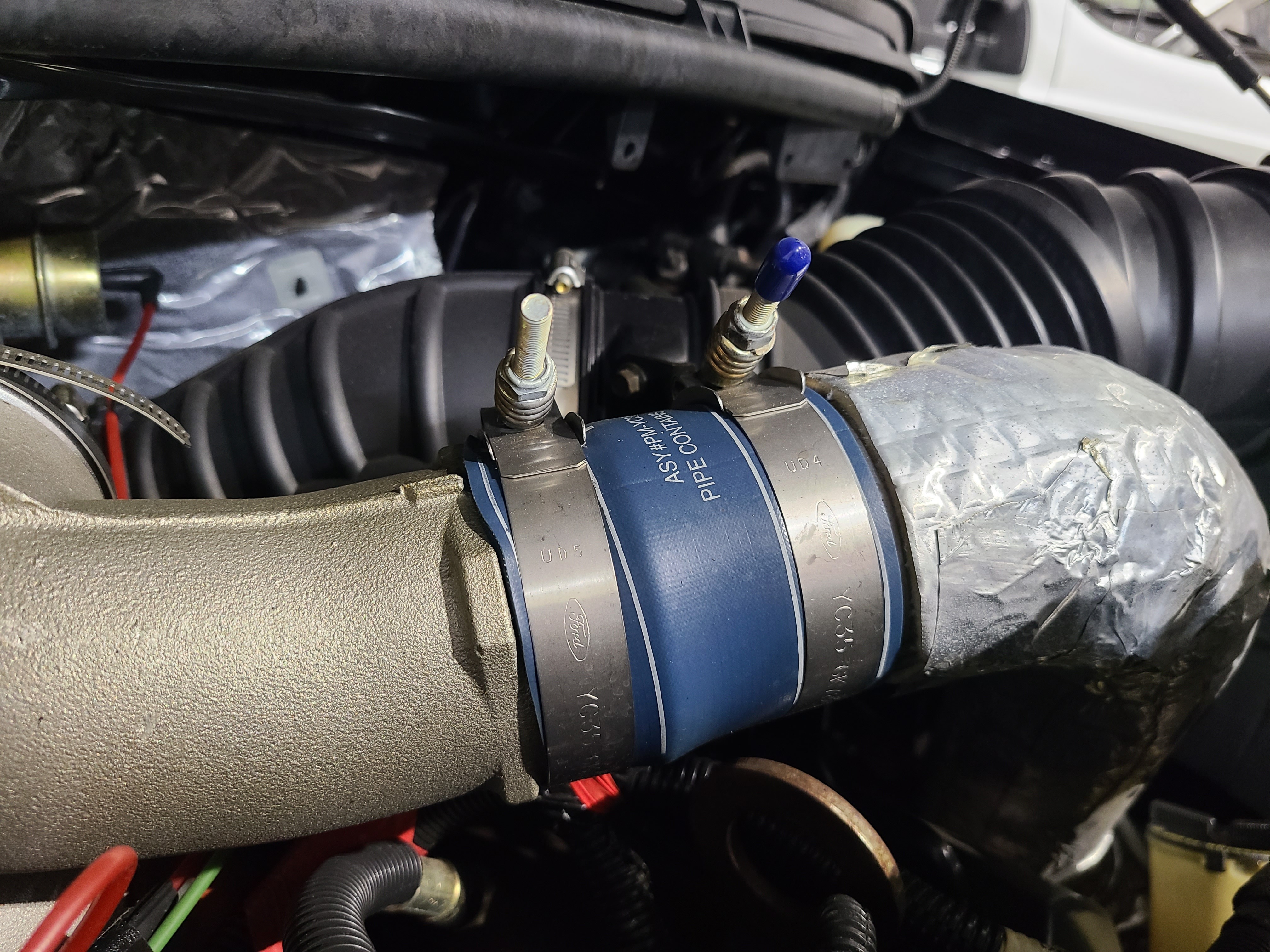
Oil contamination.
Unless you're pushing astronomical amounts of boost, the main cause of CAC boot failure on any diesel is oil contamination. The crankcase ventilation system sends an oil mist through the intake, coating the charge pipes, the intercooler, and the inside of the boots. Over time, this oil film degrades the stock boots and makes the surfaces slick, reducing their ability to stay put. Most “blown boot” or “random boost leak” issues trace back to oily pipe surfaces and/or boot degradation, due to the same oil.
As far as installation goes, this oil must be removed to ensure a good seal. Be sure to clean both surfaces thoroughly, on the boot and on the charge pipe. Any oil will contribute to a future failure.
So, What Boots Are Best?
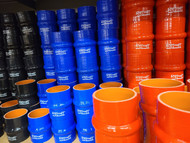
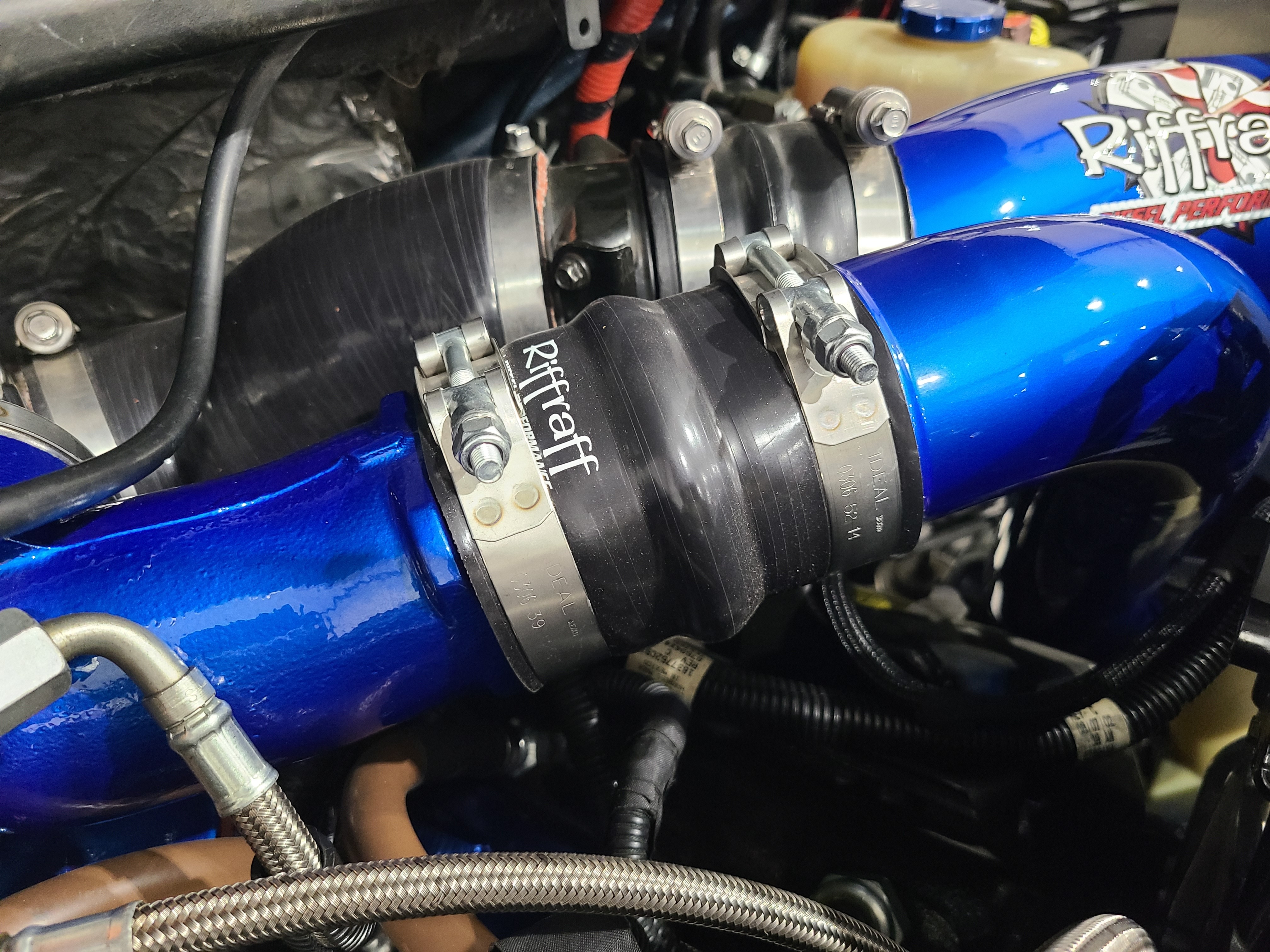
OEM boots (Motorcraft) are not bad, persay, but the aftermarket has improved upon them greatly. While most OEM boots will last maybe a hundred thousand miles, most high-end aftermarket silicone boots tend to last longer than the truck they're installed on. Using ours for example: they're built using much thicker and stronger 4-ply Aramid reinforced silicone hoses and come with stainless T-bolt clamps, much stronger combination than the OEM. The boots are extremely oil resistant and will handle 550 degrees F plus they've been tested at 180 psi of boost. Thats more temperature and boost than just about any 6.0 or 7.3 will ever see. OEM parts definitely have their place, but when it comes to boots, go with a quality aftermarket set, even if you don't use ours.
What Torque Should The Clamps Be Set To?
A very common question we get. Typically you want something around 8-10 ft-lbs but we're dealing with spring clamps on silicone. A torque rating won't be accurate here. The best advice we can give, just crank down on them. Don't overtorque to the point where the clamp starts to bend or things start to break. Tightening to the point where the spring collapses is fine as well and the boot starts to push out from under the clamp.
Any Other Common Problems To Note?
Make sure your CAC tube, and in the case of the 7.3, the plenums, are in good condition. While CAC tubes generally don't collapse, plenums on 7.3's very much so do. A collapsed tube or intake plenum will cause a massive leak either through the collapsed area or because the boot simply won't stay on. Make sure your tubes are sound, and for 7.3's with the factory intake plenums, we highly recommend adding some of our plenum reinforcement inserts to beef them up. You can find those inserts here: 1999.5-2003.5 and 1994-early 1999
In Summary, When Replacing CAC/Intercooler Boots:
- Use high-quality boots. OEM/Motorcraft are OK, but most aftermarket silicone boots are much better.
- Clean both surfaces thoroughly, the inside of the boot and the outside of the pipe (or turbo) before installing. Oil contamination causes blown boots.
- Crank down on those T-bolts and never use screw type clamps.