
7.3 Powerstroke PCM Code Locations (1994–2003) + How to Decode What You’re Looking At
Feb 6th 2026
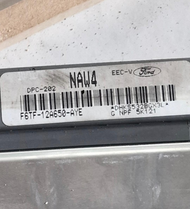
Ford didn’t make it easy: on a 7.3 truck you’ll see multiple “PCM codes” that mean different things (hardware vs. software vs. emissions calibration). The trick is knowing where each code lives and which one the parts guy / tuner actually needs.
The 4 codes you’ll run into (and what they actually mean)
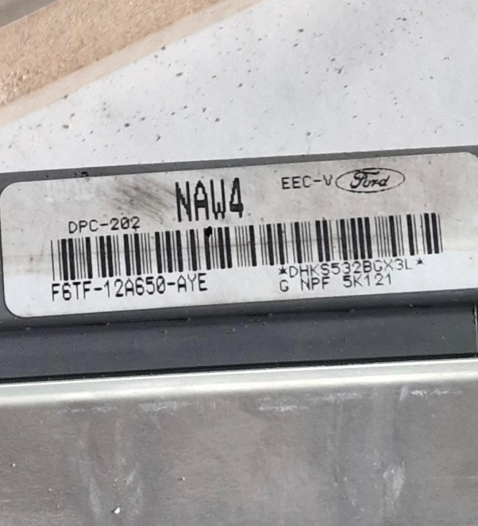
1. DPC number (hardware family)
Think: “Which circuit board is inside the box?”
Diesel PCMs commonly use a DPC number (often written like DPC-422). It’s used to identify hardware versions and broad application fitment (auto/manual, van vs. pickup, etc.).
2. Tear Tag (aka PCM code)
This is the one tuners ask for most. It’s typically 3 letters + 1 number (example given: NVK0, with the number indicating the version/revision). It’s usually the largest text on the PCM label, and it may also be duplicated on the chip/cover tag (often perforated so half can be torn off).
3. Ford PCM part/engineering number (the “12A650” number)
This is Ford’s part identifier, often in a format like XC3F-12A650-BB (example shown). 12A650 is the base number Ford uses for the PCM; the prefix/suffix narrow down year/program/revision.
4. Emissions Calibration / VIN label calibration number
Ford used calibration identifiers to match emissions configurations (and sometimes multiple calibrations exist for the same model/engine). The calibration info can be found on an emissions calibration label (through roughly 1998 builds) and then commonly on a VIN label after roughly 1998 (also commonly under the hood).
Where to find the PCM and the codes (by truck generation)
OBS 7.3 trucks (1994.5–1997 F-250/F-350)
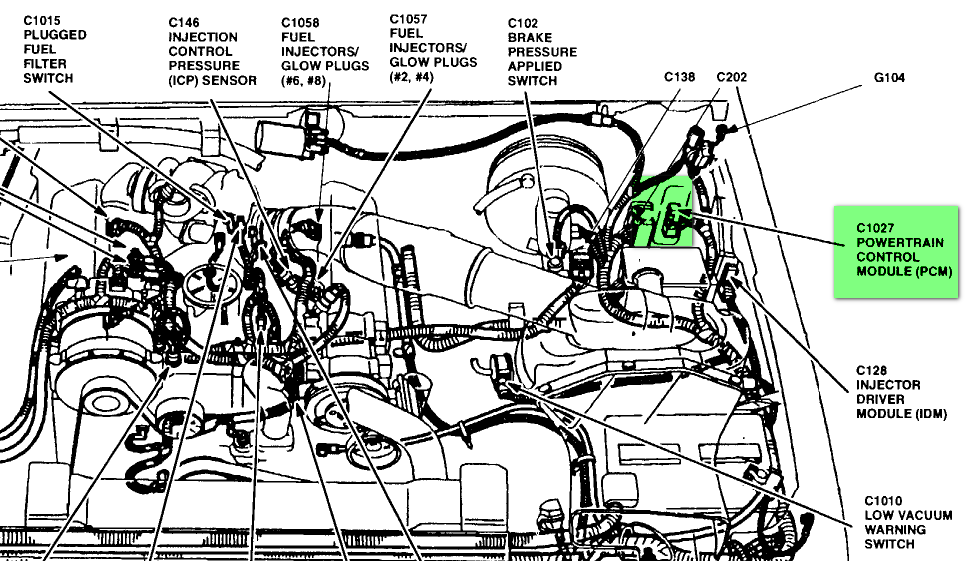
For a 7.3-equipped OBS era F-series, the PCM is shown at the LH side of the safety wall (firewall area) in the engine bay view.
Where the codes are: on the PCM’s main label near the connector (DPC / Tear Tag / Ford part number). If you’re chasing the emissions calibration label, check common label spots like door jamb or underhood.
Note: There is no 1998 model-year 7.3 F-series (Ford skipped to the Super Duty generation with the 7.3 returning for 1999).
Super Duty 7.3 trucks (1999–2003 F-250/F-350/F-450/F-550)
Same spot here, the PCM is in the engine compartment, LH side, rear.
Removal details include: a bolt-retained harness connector (accessible from under the hood), then the PCM comes out after removing screws/cover (found in the drivers side footwell near the e-brake).
Where the codes are: again, on the PCM label at/near the connector (DPC number + Tear Tag + Ford part number).
How to “decipher” the codes in 60 seconds
1. Start with the Tear Tag (example format: NVK0).
Letters = family; number = revision/version. A later version might be NVK1, NVK2, etc.
2. Grab the DPC number (hardware family).
DPC numbers are used to identify the PCM hardware version and broad application grouping.
3. Read the Ford part number (example: XC3F-12A650-BB).
The suffix letters commonly change with revisions (example given where BB → BC → BD tracks software changes alongside the Tear Tag progression).
4. Cross-check the emissions calibration label/VIN label if you’re ordering a PCM
Ford used calibration identifiers to distinguish emissions configurations; the guide explains where those labels are typically found and why they matter for ordering the correct unit.
Reality check (important): trucks get PCM-swapped. If you suspect that, one approach is a VIN-based lookup to confirm the expected software code, as described by DieselTechChatt (they reference Motorcraft’s As-Built/VIN lookup workflow).
Why any of this matters (chips, tunes, and “my shifts are weird now”)
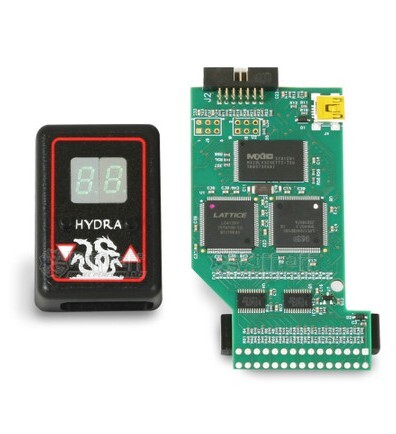
Hardware family matters most for basic compatibility, but calibration can affect behavior (like shift scheduling if the donor PCM came from a different gear ratio or chassis).