
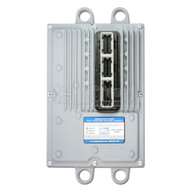
6.0L Powerstroke FICM Testing: Common symptoms and diagnostic procedures
Posted by Adam Blattenberg on Sep 17th 2025
The 6.0L Powerstroke’s Fuel Injection Control Module (FICM) is the brain of the injection system. It receives signals from the PCM to control the injectors themselves. The FICM lives in a very harsh environment. Located on the drivers side valve cover, where vibration is high, it’s hot, and it's dirty. Because of this, the FICM is a common fail item on 6.0L Powerstroke diesels. No starts, long hard starts, or starting and almost immediately dying, are the most common symptoms, but rough running is also possible. Failures generally happen with the FICM’s internal power supply. Testing the FICM’s power side (hands down the most common failure) is simple. In this article, we’ll go over the most common symptoms of FICM failure and how to diagnose them (as well as how to test the FICM’s power supply).
Note: We’ll mention the power supply side many times here. It’s important to understand that the FICM is split. Inside, there’s a power supply side and a logic side. The logic side can fail, but it’s fairly rare.
Tip: Make sure the batteries are good and have a full charge. Also make sure the charging system is working properly. Poor voltage supply to the FICM (from dead or poor batteries) will cause all sorts of issues, including the ones listed below.
Most Common Symptoms:
- Long crank, won’t start without throttle input; rough early idle (commonly lasts 30 seconds to two minutes), white smoke, loping idle.
- Runs fine when warm, but not when cold.
- Misfire at idle; sometimes cylinder circuit or injector group codes.
- No or a weak injector “buzz” when the key is cycled on.
- DTCs: P0611 (FICM Performance), P2146/P2149 (Injector Group open/short), U0105 (Lost comm with FICM, this one’s less common)
Diagnostics:
Since the power supply side is hands down the most common cause of these issues, we’ll stick to diagnosing that issue. Going beyond the power side of the FICM requires higher-end scan tools and a bunch of experience that’ll be hard to convey here. A full guide from International on FICM diagnosis can be found here (download): https://www.ford-trucks.com/forums/attachment.php?attachmentid=300368&d=1744304679
Testing the voltage side is fairly simple. Two different FICM’s exist, but the general process is the same. After you gain access to the FICM, remove the cover and test voltage at a pin with a multimeter. ONE BIG NOTE, be sure NOT to accidentally ground out any of the pins when testing or short them out to each other. That can burn up the FICM. Only touch the one pin with your probe and nothing else.
Voltage Testing Step By Step:
- To gain access to the FICM, remove the coolant degas bottle and set it aside. There’s no need to disconnect any hoses or to drain the coolant, just gently push it to the side. FYI, older degas bottles may crack when doing this, so use caution. If you're worried about cracking the bottle, just drain the coolant and remove it.
- On the FICM, remove the access cover held on by two number 20 Torx screws.
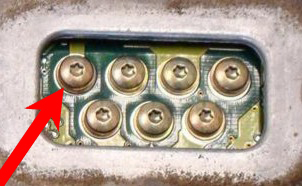
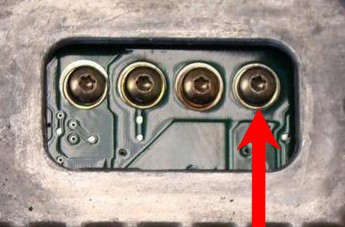
- Count the pins. A 7-pin (commonly on 2003-2004 models) and a 4-pin (most commonly on 2004 and later) FICM were used. Testing is different for each.
- For a 7-pin FICM you’ll be testing voltage at the top pin on the four-pin row or the pin closest to the center of the engine (see image below). For a 4-pin it’s the bottom pin or the pin closest to the driver's side of the engine.
- With your multimeter set to DC Volts, ground the negative side and with the positive side, test voltage at the previously mentioned pin. The key must be on for this test, engine off. Voltage should be between 47 and 49 volts.
- Next, have someone cycle the key on and off while testing voltage at the same pin. You’re looking for the same voltage as before, while the injector buzz test is occurring (the buzz you hear when you first cycle the key to run).
At 47-49 volts, the FICM power supply side is functioning as intended.
Between 36 and 45 volts means there’s an issue, but it's still likely ok.
Below 35 volts means the power supply is bad. Replace it.
If you’re seeing no voltage, check the supply to the FICM itself. Bad connections at the harness plug are common; inspect those as well.
7-Pin testing location:
4-Pin testing location:
Here’s a great video from BulletProof Diesel on voltage testing:
Here’s a great thread from Ford-Trucks.com on the procedure: https://www.ford-trucks.com/forums/899444-ficm-testing-procedure.html
***Disclaimer: The information provided on this blog is for informational purposes only. We share our knowledge and experience, but we are not liable for any damages, injuries, or losses that may occur as a result of using this information. Situations are rarely cut and dry in the automotive world. Your situation will likely be somewhat different than what we describe here. Use your best judgment and always consult a qualified professional for automotive repairs and modifications. Your safety is your responsibility.