6.0L Powerstroke EGR Cooler Problems: Symptoms, Causes, and Diagnosis
Posted by Adam Blattenberg on Sep 8th 2026
The 6.0L Powerstroke EGR cooler has a bad reputation, but the cooler itself is not always where the problem starts. In a lot of cases, the real failure begins with a restricted engine oil cooler. Due to the restriction, coolant flow through the oil cooler drops, the EGR cooler, next on the coolant path, gets starved for coolant, exhaust heat takes over, and eventually the cooler cracks internally. Replacing the EGR cooler without checking the oil cooler is a good way to do the job twice.
What the EGR Cooler Does
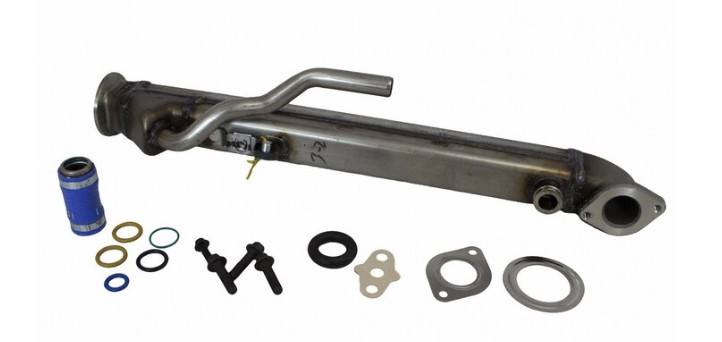
The EGR cooler is basically an exhaust-to-coolant heat exchanger. Passageways within the cooler exist, one for coolant, another for exhaust. Hot exhaust enters the cooler before reaching the EGR valve and intake manifold. Engine coolant absorbs some of that heat, reducing exhaust-gas temperature before it gets fed back into the engine. When everything is working, it's pretty simple. Problems start when coolant flow drops or soot restricts the exhaust side.
Why 6.0 EGR Coolers Fail
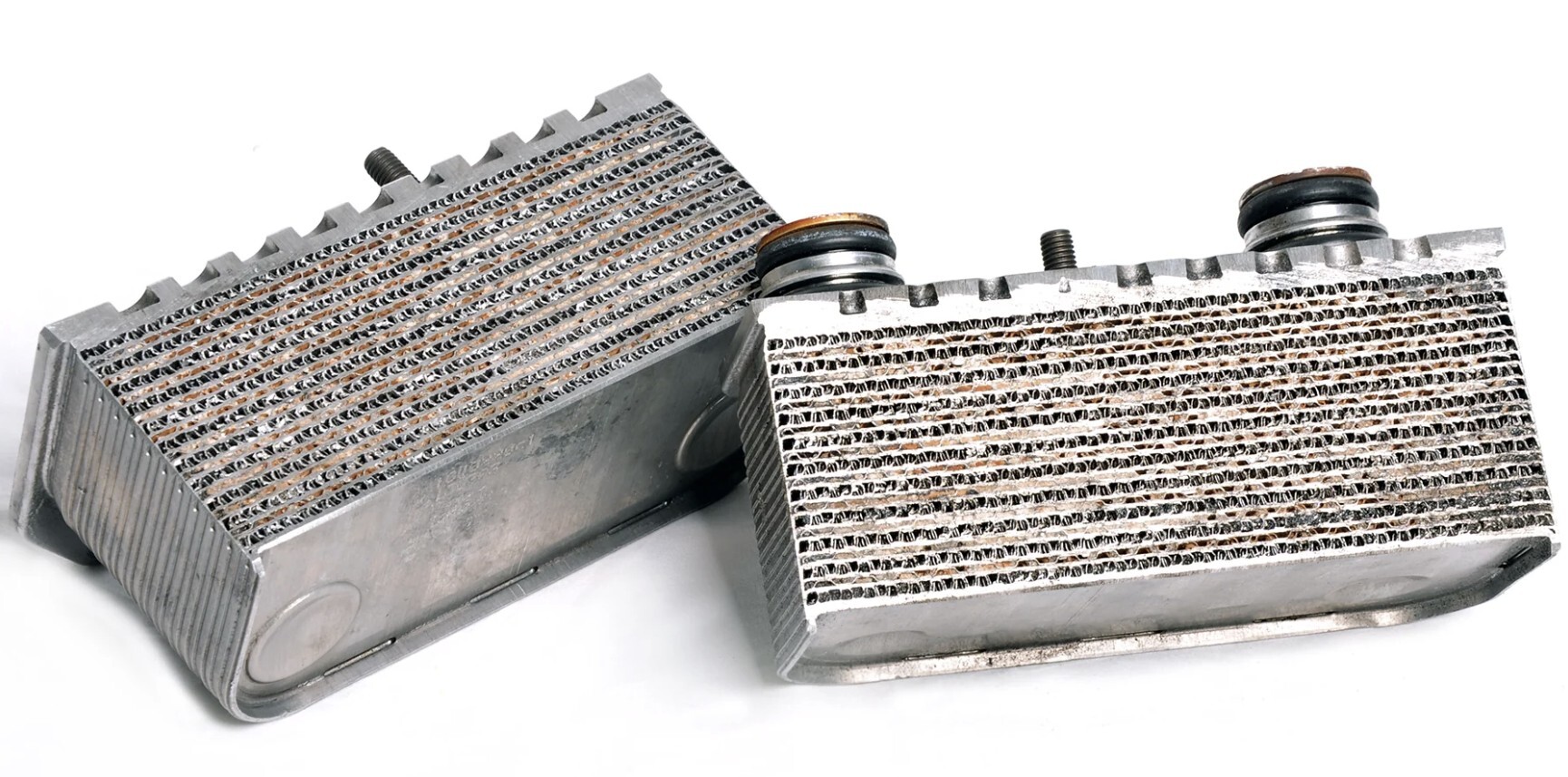
Restricted Oil Cooler
This is the big one.
Coolant travels through the engine oil cooler before going to the EGR cooler. Debris, corrosion deposits, casting sand, and other cooling-system contamination can restrict the small passages inside the oil cooler. When that happens, less coolant reaches the EGR cooler, reducing it's ability to cool the exhaust. The coolant that made it into the EGR cooler can then begin boiling, creating extreme pressure spikes until the internal tubes or joints fail.
New Ford Oil Cooler: https://www.riffraffdiesel.com/oil-cooler-kit-03-07-6-0l/
Thermal Cycling
The cooler sees hot exhaust on one side and engine coolant on the other. Like bending a paperclip back and forth, thousands of heating and cooling cycles eventually fatigue the internal construction.
Note: the later square-style cooler is generally considered more failure prone than the early round design.
Soot and Carbon Buildup
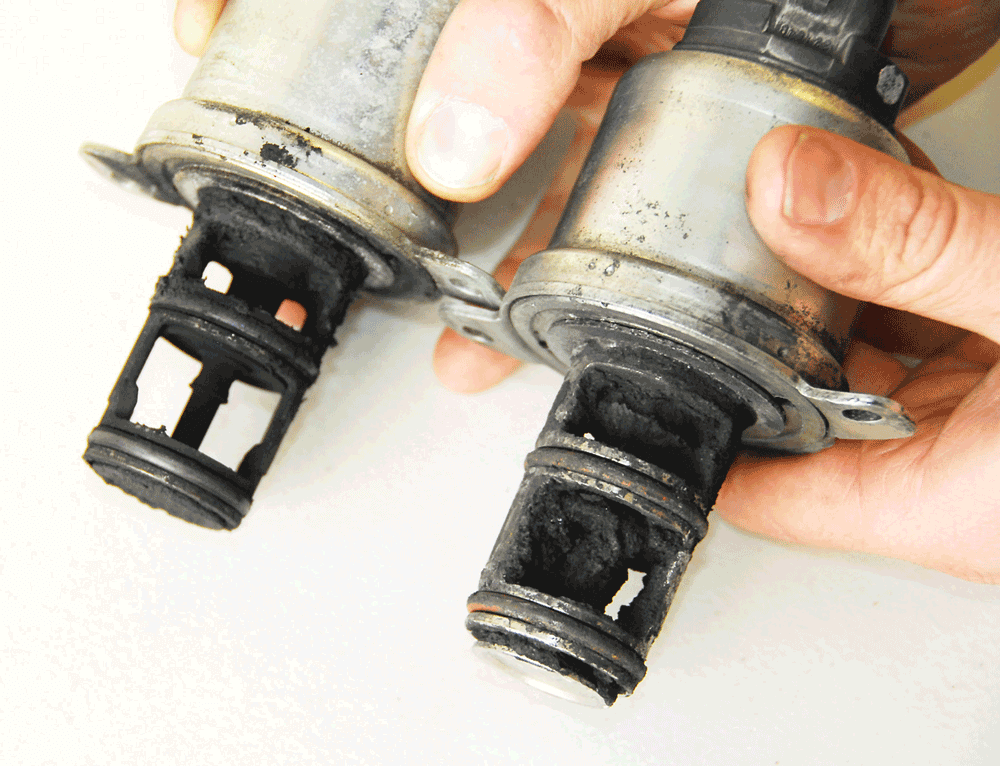
Soot can restrict exhaust flow through the cooler and EGR valve.
That can reduce EGR flow, hurt performance, and set EGR codes even when the cooler isn't leaking coolant. Ford specifically addressed excessive EGR-system coking on these engines.
Common EGR Cooler Failure Symptoms
Look for:
- Unexplained coolant loss
- White exhaust smoke or steam
- Sweet coolant smell from the exhaust
- Degas bottle bubbling
- Coolant pushed from the degas bottle
- Cooling system building pressure
- Low power
- EGR-related trouble codes
A leaking EGR cooler can send coolant directly into the exhaust. Depending on the size of the leak, you might only see white smoke after startup or after the truck has been sitting. And a badly failed cooler can lose coolant surprisingly fast.
Codes to Watch
P0401: Insufficient EGR Flow
Usually points toward restricted EGR flow. A clogged cooler, carboned-up EGR valve, intake deposits, or another EGR-system problem can cause it.
P0402: Excessive EGR Flow
Typically indicates too much EGR flow or an EGR valve that isn't closing correctly.
P0404: EGR Control Range/Performance
Usually associated with EGR valve movement or position problems.
P1335: EGR Position Minimum Stop Performance
Another common EGR-system code related to valve position and carbon buildup.
Note: P0401, P0402, P0404, and P1335 are commonly associated with EGR-system coking (soot build up).
Another important point: a leaking EGR cooler may not set an EGR code at all. Coolant loss and white smoke can be your only clues.
EGR Cooler or Head Gaskets?
This is where things get expensive if you guess wrong.
Both can cause:
- Coolant loss
- Degas bottle pressure
- Coolant puking
- White exhaust
- Overheating
Start with the EGR system and oil cooler before automatically calling it head gaskets.
Pull the EGR valve and inspect inside the intake. Coolant, wetness, or unusual white deposits can point toward a leaking cooler.
You can also pressure-test the cooling system and inspect for coolant entering the EGR passage.
Check EOT vs. ECT
This is one of the most useful tests you can do with a scan tool.
Monitor:
- Engine Coolant Temperature, ECT
- Engine Oil Temperature, EOT
Get the truck fully warmed up and drive it under load. ECT should be above 190°F. If EOT exceeds ECT by 15°F or more, the oil cooler is considered restricted enough to require replacement.
If you're replacing a failed EGR cooler and the oil cooler fails this test, replace both, or your EGR cooler fix will likely be short lived. It is good and common practice to replace the oil cooler whenever you’re replacing the EGR cooler. So if you can, do both.
Round vs. Square EGR Coolers
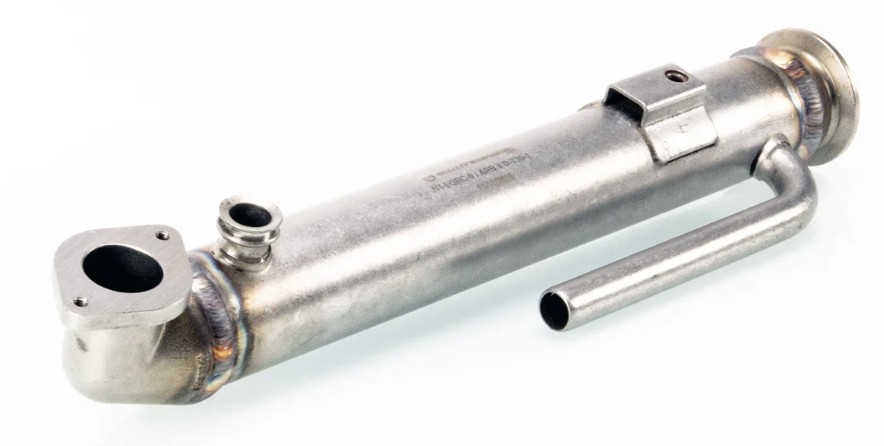
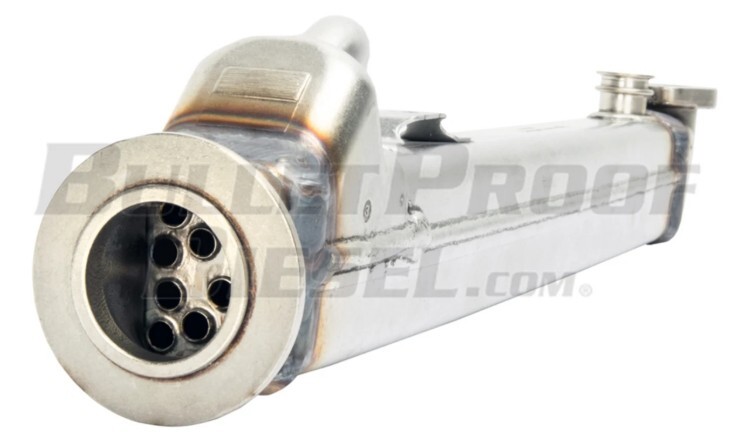
Early 2003 and very early 2004 engines use a round EGR cooler. Later engines use the square-style cooler.
The change occurred around the September 2003 production period, so don't order strictly by model year. Look at the cooler that's actually on the truck. The lengths are different, they will not interchange.
We carry upgraded Bullet Proof Diesel versions of both designs. The replacement coolers use heavier stainless tube construction and increased coolant capacity compared with the original designs. They are extremely robust.
The Bottom Line
If a 6.0L is losing coolant, blowing white smoke, or pushing coolant from the degas bottle, the EGR cooler should be high on the list. But don't stop there.
Check EOT versus ECT, always. A restricted oil cooler is one of the biggest reasons EGR coolers fail in the first place.
Fix the EGR cooler, fix the coolant-flow problem that killed it (likely the oil cooler), and you greatly improve the chances of only doing the job once.