Why Your 4R100 O/D Light Is Flashing: Common Codes, Symptoms, Causes, and Fixes
Mar 25th 2026
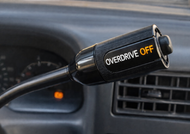
If the O/D OFF light on your shifter is flashing, your truck is not just asking for attention. It is telling you the PCM saw a transmission-related fault. A solid light usually means overdrive was manually turned off. A flashing light means something in the 4R100’s control or hydraulic system is unhappy, and Ford’s service information backs that up.
The good news? A flashing O/D light does not always mean the transmission is dead.
The bad news? It also is not something you ignore and hope fixes itself.
On a 4R100, the blinking O/D light usually points to one of three buckets: bad input, bad control, or real internal slip. Sometimes it is a sensor. Sometimes it is wiring. Sometimes it is a solenoid. And sometimes the transmission is actually on its way out.
What the symptoms are trying to tell you
If the truck suddenly starts shifting hard, that is a big clue. The 4R100 will often go into a protective strategy that commonly results in adjusted line pressure and shift points, commonly causing harsher shifts.
If it neutrals out in overdrive or 4th, or the shift pattern gets weird, the MLPS/TRS (Manual Lever Position Sensor/Transmission Range Sensor) needs to be high on your suspect list. It is a known problem area, and moisture or connector issues can make it act dumb fast.
If the truck is turning more RPM than it should at cruise, feels like it never fully settles down on the highway, or loses lockup under load, think torque converter clutch trouble. That can be electrical, hydraulic, or converter-related.
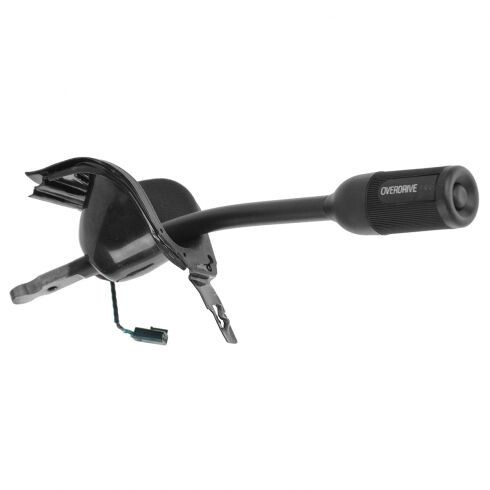
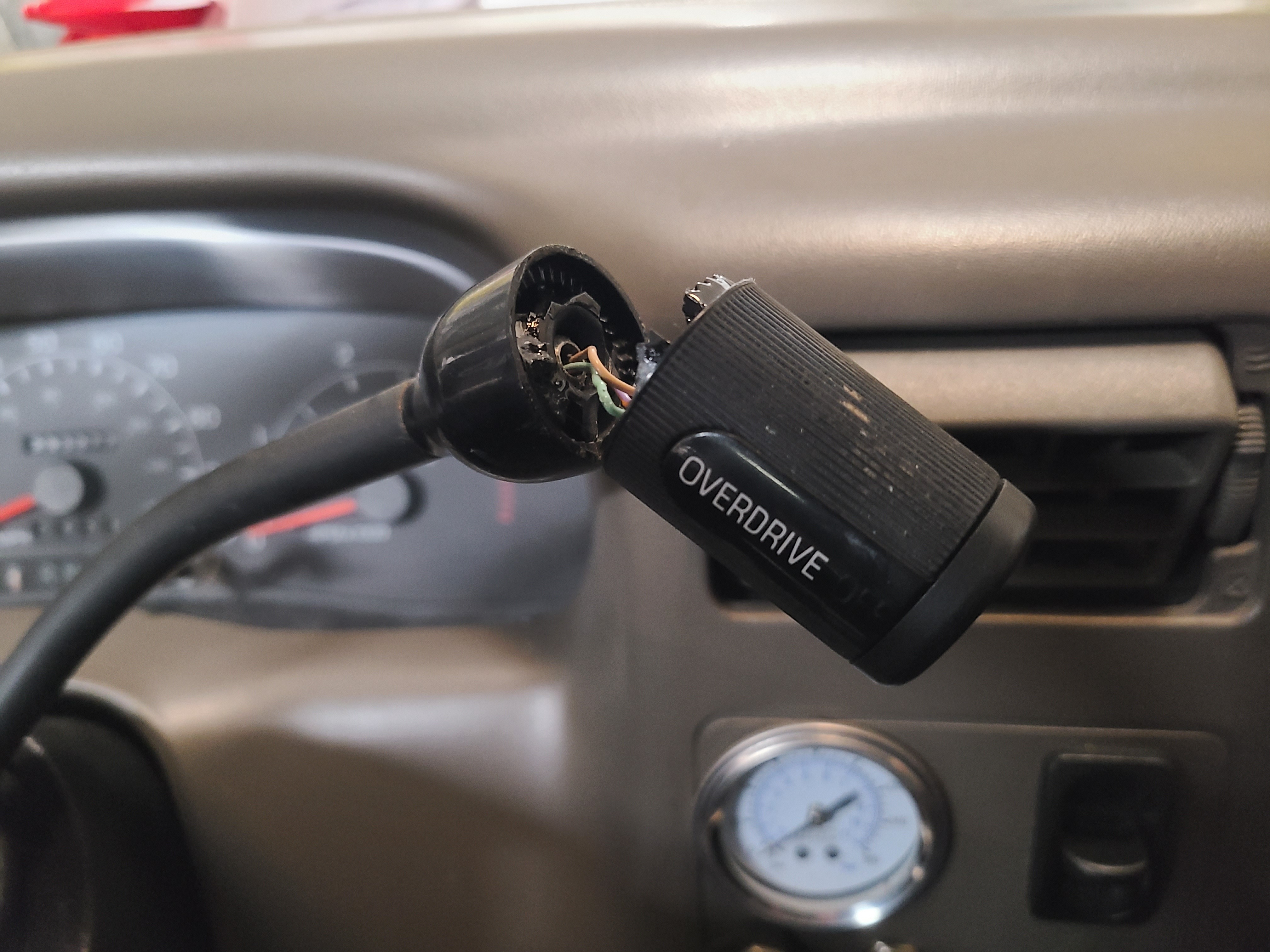
If the O/D button itself is intermittent, do not forget the little wires in the shifter handle and steering column. Those can chafe, break, and create problems that look bigger than they are.
Common 4R100 codes behind a flashing O/D light
Here are some of the usual code families tied to 4R100 O/D light complaints:
- P0705 / P0708 — MLPS / range sensor fault
- P0500 — vehicle speed sensor fault
- P0720 — output shaft speed sensor fault
- P0715 — turbine speed sensor fault
- P0712 / P0713 — transmission fluid temperature sensor fault
- P0750 / P0755 — shift solenoid fault
- P0743 / P1740 / P1744 — torque converter clutch fault or slip
- P1747 — EPC solenoid electrical fault
*The code matters, but the symptom matters too. The scanner points you in the right direction. Use codes and any other info available when diagnosing.
Common failure points and fixes
MLPS / TRS
Symptoms: erratic shifting, wrong gear starts, neutraling in OD or 4th
Cause: failed range sensor, moisture intrusion, corroded connector
Fix: inspect the connector, check for corrosion, and replace the sensor if needed.
OSS, TSS, or VSS sensors
Symptoms: weird shift timing, speed-related issues, strange lockup behavior
Cause: failed speed sensor or damaged wiring
Fix: inspect the harness first, then test and replace the bad sensor.
Shift solenoids or internal harness
Symptoms: missing gears, wrong shift pattern, repeated flashing O/D light
Cause: bad solenoid, damaged internal harness, electrical fault
Fix: test the circuit, inspect the connector, and replace the failed part.
EPC solenoid
Symptoms: very harsh shifts, truck feels like line pressure is maxed out
Cause: failed EPC solenoid or wiring fault
Fix: inspect the EPC circuit and repair wiring or replace the solenoid as needed.
Torque converter clutch / TCC circuit
Symptoms: no lockup, highway flare, slipping under load, flashing light when towing
Cause: TCC solenoid problem, hydraulic leak, converter clutch slip
Fix: diagnose before throwing a converter at it. Some failures are electrical, some are hydraulic, and some really are converter failure.
O/D switch or shifter wiring
Symptoms: intermittent O/D button, odd lamp behavior
Cause: broken or chafed wires, most commonly in the shifter or column although not limited to this
Fix: inspect and repair the wiring, replace the switch and/or stalk if needed.
Internal clutch damage
Symptoms: delayed shifts, flare, slip, skipped gear feeling
Cause: worn clutches or internal hard-part damage
Fix: at that point, you are usually looking at internal repair or rebuild.
How to diagnose it without wasting money
Start simple. Make sure the light is actually flashing, not just on because the button got bumped. Pull the codes. Check the fluid. Look at the external wiring and connectors. Pay attention to whether the issue happens hot, under load, towing, or only in one gear. That is how you stop guessing and keep from buying parts the truck never needed.
Bottom line
A flashing O/D light on a 4R100 is not an automatic death sentence, but it is a real warning. These transmissions will flash that light for sensor issues, wiring faults, solenoid problems, converter slip, and real internal transmission wear. The trick is not panicking and not playing parts darts.
Pull the code. Match it to the symptom. Check the easy stuff first. Then fix the actual problem instead of donating your budget to parts darts.
Disclaimer: The information provided on this blog is for informational purposes only. We share our knowledge and experience, but we are not liable for any damages, injuries, or losses that may occur as a result of using this information. Situations are rarely cut and dry in the automotive world. Your situation will likely be somewhat different than what we describe here. Use your best judgment and always consult a qualified professional for automotive repairs and modifications. Your safety is your responsibility.