
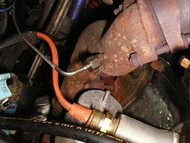
EGT Probe and Tap Installation Kit: Diesel Gauge Must Have
Feb 13th 2026
If you’re installing an EGT (pyrometer) probe, the hardest part usually isn’t wiring—it’s getting clean threads into a cast manifold/up-pipe without gumming everything up. That’s why we put together the Pyro Probe Drill and Tap Set (RDPDAT) with the two tools you actually need: a Letter “R” drill bit and a 1/8" Irwin tap.
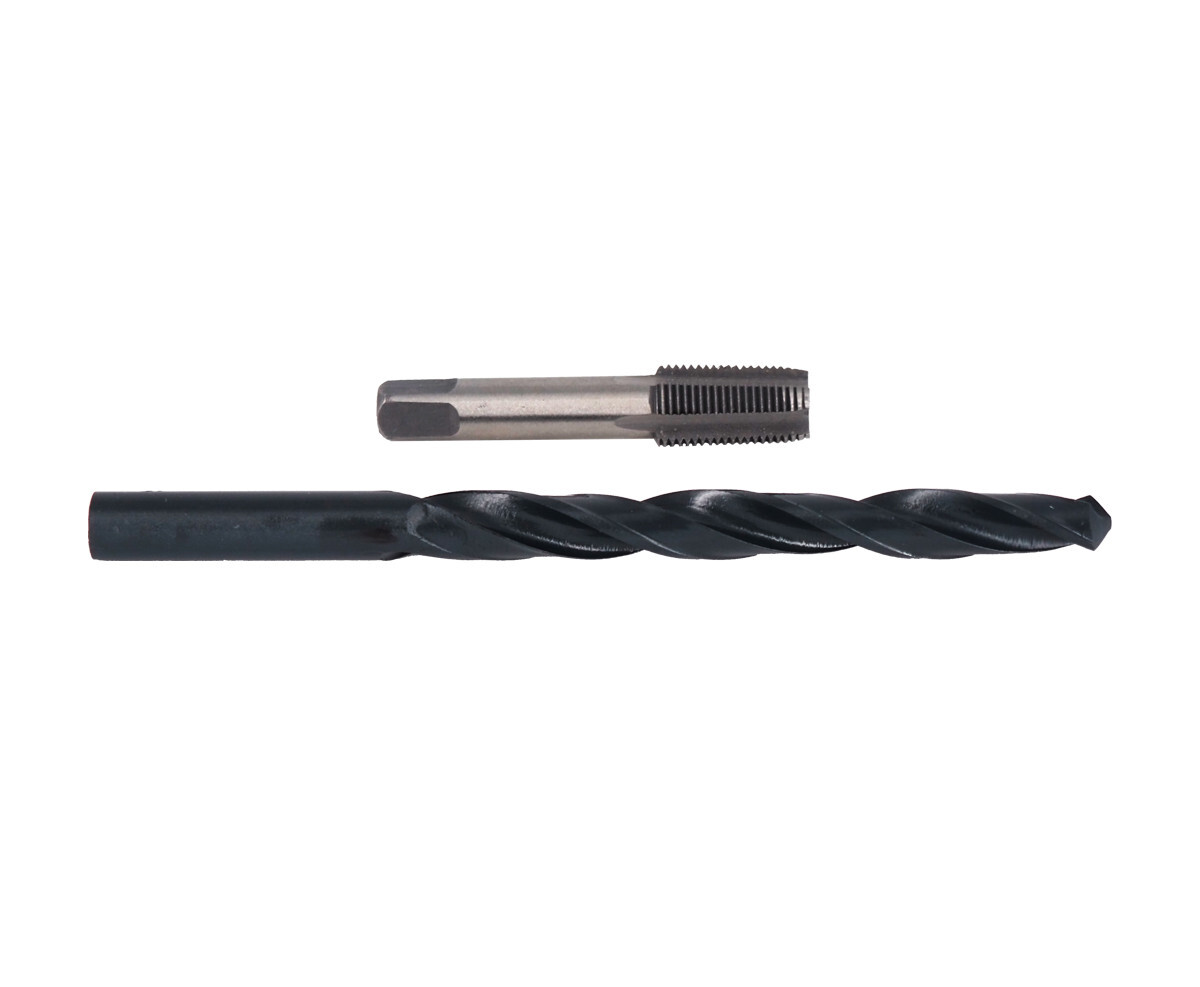
What’s in the kit
- Letter “R” drill bit
- 1/8" Irwin tap
This combo is commonly used when installing 1/8”-27 NPT EGT probes—the whole idea is “right drill + right tap” so you’re not buying a full tap set just to drill one hole.
Where the probe typically goes (and why)
- A common location is the driver-side exhaust manifold or up-pipe, which gives the probe a useful, responsive read on exhaust heat with easy access for installation.
The clean way to drill & tap (the method we follow)
From our own gauge install guidance: https://www.riffraffdiesel.com/content/RESOURCES/Instructions_Gauge_Pod.pdf
- Step-drill the hole: start small and work up. The final hole size for 1/8”-27 NPT is Letter “R” (11/32” / 0.343”).
- Keep chips out: you don’t have to remove the manifold—careful drilling plus a vacuum at the hole helps pull chips out as you go.
- Don’t run the tap all the way in: pipe threads are tapered. Tap a little, test-fit the probe, then go deeper only if needed.
- Vacuum again when finished, then install with anti-seize on the adapter threads.
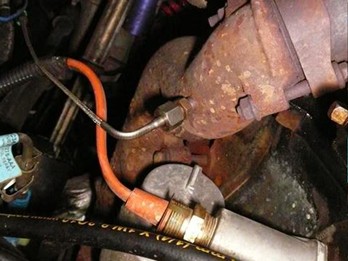
Real-world tips from people who’ve done it
- Take your time, and use a magnet to help manage chips—especially on the driver-side manifold. Adding a thick grease to the drill and tap will also help catch any shavings.
- Recomended sequence: pilot hole first, drill with the Letter “R,” then tap only partway (roughly “2/3” depth) to get solid thread engagement without burying the probe into the flow path or ruining the tapered threads.
Bottom line
If you’re adding a pyrometer/EGT gauge (especially on a tuned or hard worked truck), this kit is the simplest way to get the correct hole size and threads without guesswork—and it’s one of those small tools that prevents a big, expensive mistake.